Pages

Showing posts with label The New Blog. Show all posts

Sunday, December 20, 2020

A Should-less Christmas

There's a list of words and phrases I don't allow my clients (or myself) to say.  The aforementioned 'what if' is one of them.  Another, perhaps the biggest and most important of the outlawed words, is should.  In my experience, this the most destructive word in the English language and it's message comes through loud and clear- sometimes in unspoken ways.

The spoken is obvious.  I should do this or that, I shouldn't have done this or that, I should be this way that I'm not.  When heard from outside, it's you instead of I, but all the rest is the same.  It's a comparison to some idealized reality or a command to improve in ways we can't.  It comes from media, our families, friends, and yes- ourselves.  And it hurts, every time.  It's a one way ticket to shame town on a bullet train that gets faster the longer we're on it.  And the number of shoulds seems to grow the more we listen to the messages.  

The particular breed of shoulds I've been hearing a lot lately are about the holidays.  And despite being in the midst of a pandemic where 3k plus people a day are literally dying there's still a ton of them going around. Shoulds about holiday decor.  Shoulds about the perfect Christmas meal.  Shoulds about gifts and showing love through monetary means (as if that's ever worked in the first place).  And most of all shoulds about family togetherness.  And right now I think that's the single most dangerous should we can buy into.

No, no one wants to zoom Christmas dinner.  No one wants to exchange gifts virtually.  No one wants to celebrate with Netflix and takeout instead of home-cooked family dinner and games.  But right now I think that's the most loving thing we can do.

I don't know what's safe and what's not.  I've given up on trying to figure out if I'm being overly cautious or taking really unnecessary risks.  All I know is that one family dinner isn't worth dying over.  And certainly not worth killing over.

So I'm telling that voice in my head that I should go see my parents to shut the hell up.  I'm forgiving the part of me that is scared of doing the wrong thing, hurting people's feelings, and generally fucking up.  I'm sitting in the quiet resilience that trusts that there will be another Christmas in the future that looks a lot more like ones of the past.  Because if we all stay safe, there will be.

Sunday, December 6, 2020

What if?

It's funny, what if is normally something I don't allow my clients to say because usually it triggers panic.  "What if I get COVID?", for example, is a question that could easily trigger a panic response in any one of us that are sitting primarily on the outside of this thing with no first-hand knowledge to fact check or allay the fears that come from thinking about the possibility of contracting a potentially fatal disease.  Which is why normally, I outlaw that phrase.  Don't say it, don't feed into the negative thought spiral.  It's simply not a productive line of reasoning.

But sometimes, I think it can be a powerful exercise to think about that question in the big scheme of things.  What if, for example, I'm never known for anything other than what I mean to the people who love me?  If I never get famous, never publish that book I sometimes still dream of writing, never revolutionize the field of psychology, never get a Wikipedia article written about me, and never have anything on my epitaph other than "Loving"?  Would that mean that my life wasn't worthwhile?

What if I never "figure it out"?  What if the meaning of life, the great spiritual answers to the universe, the wisdom of the scribes is something that I'm always questioning and never answering?  Would that mean that all those questions beat me?  That I never learned?

Or what if I never have "enough money"- whatever any one of us dreams of enough money to be?  What if paying bills always causes me stress, tax season is always something I experience some small amount of anxiety over, my credit card bill is always more than I thought it would be?  Would that mean that I wasn't successful?

What if, and this is my biggest fear, I fail?  At life.  What if I never achieve whatever it is that I think I'm meant to?  (Which, to be fair, can change on a daily basis.)  What if, on my death bed, I look back and am overwhelmed with a sense of missed opportunities, chances not taken, experiences not experienced?  Will that mean that I failed, that everything I fear is true?  Or what if that's just a perspective?  One that I don't have to take?

I try not to take that perspective.  On a daily basis.  I try to look at the black and white thinking my mind does and see it as just that.  To realize that if even one person I love has a better life because I'm in it, that I am winning at this whole life thing.  To consider that if I help even one person in my work as a therapist, that what I do every day is worth it.  To look at only the experiences I've already had, rather than focusing on all those I've yet to, as enough.  To see my life exactly as it is as worthy, important, and big enough for this life I've been given.  What if I, actually am, enough?

Saturday, November 7, 2020

A Break in the Storm

This is the first time I have allowed myself to give more than a cursory glance at the news in weeks.  I've been staying off MSN for anything more than a second or two once a day to see the headlines simply for the sake of my own sanity.  But this morning, watching countless videos of people recording the din outside their apartments in major cities all over the country, I started crying.

I've been too scared to let myself get optimistic.  Too cynical to let hope lead me to believe that it was only a matter of time like so many thought it was.  Too tense to let myself relax.  And I'm still not relaxed.  True to form, the toddler-in-chief is starting the hissy fit we all knew was coming by swearing that his team of lawyers will prove fraud and put all those news sources in their place for calling it.  But even with all the bullshit that will go on over the next month as he wages battles he is sure to lose, I feel confident for the first time in this race that it'll end up the way we need it to.

I'm not thinking about what will come next.  I'm not worrying about the impossible feat ahead for this new president of ours.  I'm not letting my mind drift into the future and think about logistics or senates or the political climate.  Right now I'm just thinking about the fact that there may be- for the first time in a LONG time- reason to hope.

Saturday, September 26, 2020

So You Want to Talk About Race by Ijeoma Oluo (Takeaways)

So You Want to Talk About Race by Ijeoma Oluo

I am grateful beyond my ability to express to Ijeoma Oluo for writing this. It is truly a gift to white people who want to learn but are sometimes/often afraid to ask because, as she points out repeatedly, it is not the responsibility of the black person you are talking to to educate you. She breaks down everything from what racism is and isn't, how deeply ingrained it is within all of our psyches, and how it's intrinsic in basically every single facet of American society and culture. From checking your privilege and the importance of interesctionality to police brutality and the school-to-prison pipeline to cultural appropriation and microaggressions all the way down to why hair is such a huge and illustrative issue showing how deep the roots (no pun intended) of all this brainwashing goes.

SO MUCH came out of my reading of this. For one, I will never again say "I'm not racist" because, as she points out "if you are white in a white supremacist society, you are racist. If you are male in a patriarchy, you are sexist. If you are able-bodied, you are ableist. If you are anything above poverty in a capitalist society, you are classist. You can sometimes be all of these things at once." And recognizing, as she states several times, that none of this has anything whatsoever to do with being a good or bad person but simply everything to do with being American. That's something a person like me who is prone to violent storms of self criticism needs to hear, and I'm grateful to her for pointing it out as often as she does.

For another, the importance of distinguishing systemic racism from racism not only because of what she pointed out above, but because "We can get every person in America to feel nothing but love for people of color in their hearts, and if our systems aren't acknowledged and changed, it will bring negligible benefit to the lives of people of color."

And from that, the single most important take-away of the whole thing, that the power of being white is that we get to be, as Hamilton taught us "in the room where it happens" and subsequently we have the power to ask questions, point out mistakes, and speak up for the people who aren't in those rooms. Because "Racial oppression starts in our homes, our offices, our cities, and our states, and it can end there as well."

On the whole, I can't possibly recommend this book highly enough. It is not, by any means, an easy read for a white person. But it is written by a woman who seems to genuinely want to educate, assist, and share with people on the outside looking in. She is not harsh, she is not chastising, she is not trying to shame white people into change. She is human, often identifying her own privilege and how much that has made even her blind to, and she is funny in ways that do not soften the blows of the things that need to hit hard. Again, what a gift.

*Quick note: I've written all this from my perspective as a white person and not even mentioning how useful it would be for a black person to read because if this has taught me anything it's that I can't even begin to imagine what a black person (or any person of color) would think of it. While she does speak directly to the black reader on certain topics, mainly to legitimize and defend their experiences, I think the bulk of the book really is for white people who want to learn. And that is so desperately needed.

Wednesday, September 9, 2020

Traveling Mercies: Some Thoughts on Faith by Anne Lamott (Takeaways)

Traveling Mercies by Anne Lamott

This is one of the core literary sources for my church; it gets referenced often. Though Anne Lamott is clearly Jesus-centric in her beliefs she came about it the best way: through pain, addiction, death, failure, and the loving devotion of humans who refused to give up on her. Though I tend to be Jesus-phobic (and really scared of anything echoing classical Anglo-Saxton sensibilities) I could relate to most of everything else. It’s a great reminder that whatever you call it- spirituality, faith, religion, even Jesus- it’s all the same thing. Which is, of course, how I got to join my faith in the first place.

And, side note, but I'm not sure I've ever heard such an equally charming and accurate description of UU: "Mine was a patchwork God, sewn together from bits of rag and ribbon, Eastern and Western, pagan and Hebrew, everything but the kitchen sink and Jesus." Of course, she's not actually referring to UU there. Well, at least not consciously. But it describes my faith pretty damned well so I'm taking it.

This was my first exposure to this author and I can understand the praise I've heard for her from several different sources. Her prose is beautiful. At times poetic, other times purely perfunctory. Alternately achingly painful and hilarious. Deeply personal always, in a way that lets you sit right next to her through these encounters and stories of hope. She never sells herself as someone with answers- she confesses to being a deeply flawed, perfectly fucked up human being. And that is, of course, what makes her lovable. And what lets you feel as close to her as you end up feeling by the end.

She shares stories of everything from her bohemian childhood to her early dive deep into addiction to alcohol and substances. Her eating disorder. Her first exposures to church. Her unplanned pregnancy and the child that ultimately saved her. Her deep, deep grief over the loss of her father as well as the pain she inflicted on herself by trying to fit every man she ever loved into the hole his death left in her heart. She lays everything bare with humility and acceptance. It's inspiring to see someone own up to so much without shame. Or rather, having come through the shame with a new owned sense of identity and acceptance that only comes from looking the darkest parts of yourself straight in the eyes and saying 'thank you'.

Which isn't to say that she doesn't have a lot of deeply poignant and powerful insights about spirituality. She does. But in my experience most of the powerful insights about spirituality come from humanity- not from the heavens. And sure enough, all of hers come from her own deeply flawed and perpetually imperfect existence.

For instance, her thoughts on grief: "I'm pretty sure that it is only by experiencing that ocean of sadness in a naked and immediate way that we come to be healed- which is to say, that we come to experience life with a real sense of presence and spaciousness and peace." Or on Grace: "Grace is the light or electricity or juice or breeze that takes you from that isolated place and puts you with others who are as startled and embarrassed and eventually grateful as you are to be there." Or failure: "it breaks through all that held breath and isometric tension about needing to look good: it's the gift of feeling floppier."

While clearly contained within the timeline of her own life the bulk of these stories feel timeless. Or at least, the wisdom within them does. I can see myself going back to these pages again and again searching for that one highlighted line that perfectly and gorgeously sums up a thought or an insight or a desperately needed reminder during dark times. It's an encyclopedia of pain and wisdom I can easily reference: a gift. And I'm grateful to myself to have finally read it.

Monday, August 24, 2020

Some thoughts on spirituality and grief

Ever since I joined my church- about three and a half years ago- I have wanted to give the sermon.  I can't entirely say why but it felt like a place where I could really speak, where my experiences would have greater meaning by my reflecting on them in front of an audience.  I finally did for the first time last month and I loved it.

My first sermon was about my favorite movie- why I love it, what it means to me, what I feel like it can teach those of us willing to search for spiritual messages in contemporary media.  It was challenging on a technical level- my church, like most responsible churches, is all virtual now- but not on a personal one.  It was relatively easy for me to speak to something that's had a comfortable place in my heart for so long.

But what I've always thought of speaking about, what I thought of when I first formed the desire to give a sermon, is my brother.  His suicide is something that still haunts me, still offers endless unanswerable questions, still hurts in the deepest places.  Of course I want to speak about that.

Well, I recently volunteered to do so.  I'm on the calendar for a little less than two months from now.  And because of that, it's been on my mind a lot.

He died a little over three and half years ago (gee, what a coincidence).  He was just two months shy of his 38th birthday.  My 38th birthday is tomorrow.  It's so strange to think that I'm older than my older brother.

What has become the norm, at least for the past year or so, is that I don't think about him all that often.  Of course I still get the waves of grief- the rage, the sadness, the questioning.  And of course they still come in completely unexpected ways.  But they don't hit nearly that hard anymore and they don't throw me nearly as far off course as they used to.  Nowadays the boat rocks, I feel it move, and then I just go back to rowing.

But since I formally made the request to sermon on this- and not just on him, but suicide in general- I think about him everyday.  About him, the topic, the billions of things about it that must have changed since the world went into pandemic mode.  I start formulating my sermon in my mind, start editing without specifics, start thinking of things I need to research or messages I need to incorporate. 

Here's what I have so far: I would start with a picture of him.  One of the many things I am sad about is that I don't have a recent picture of him that I can just look at whenever I feel the need.  We were so estranged by the time of his death that there hadn't been a family photo with both of us in it for years before- and all of those I left to my mother because I didn't care at the time.  The only physical, holdable photos I have of him are from when he was a child that show an impossibly adorable toeheaded boy with a bright smile and visible warmth.  I don't remember that version of him, and I don't mourn him.  I mourn the man who's face showed the dreariness he felt about life.  And I don't have a picture of him.

Technicality aside, I would start with a picture of him.  And I would talk about the stories- the one I don't like to tell, the one I don't know, and the one I like to share because it's a rare bright moment the two of us had.

The story I don't like to tell is the shortest, easiest, and most utilitarian.  It explains why this person would choose what they did without leaving any questions behind.  That story goes that he struggled on and off with heroin addiction for 20 years before ultimately taking his own life.  See?  Perfunctory.

The one I don't know is much longer, more complex, and contains a sea of questions.  And that is the story of who he actually was.  I don't know that story at all.  I have random facts: he was extremely computer savvy, he watched the Simpsons religiously as a kid, he believed in a lot of conspiracy theories, and he had a chuckle he made when teasing that I absolutely loved.  But that's nothing of the lifetime of this man I never got to know because he never let me get close enough and I ultimately gave up trying.  I don't know if I'll ever know that story and not knowing hurts more than anything else.

The last story, the one I like to tell, is a rare moment of joy between the two of us.  He was in 8th grade, I in 5th.  Our social studies teachers had gotten together so that we were all studying the same thing at different levels: Billy Joel's "We didn't start the fire" and the machine gun list of historical events that form the verses.  We'd both been given handouts with the lyrics and one afternoon, for reasons I can't remember, we decided to sing it together.  He stood in our empty driveway- my parents weren't home yet- singing the verses while I rode circles around him on my bike singing the choruses when the times came.  I love this memory of him because it sounds like something a brother and sister who love each other would do.  I love this memory because I like to think that we loved each other in that moment.

These stories all illustrate some deep points I would then go into with considered attention: the statistics and the trauma that tends to unite individuals who ultimately complete, the experience of those they leave behind who all have unanswered questions that haunt them, and the moments that shine brighter in the memories of those who will never be able to get over their loss.  There's a lot there, and I haven't even gotten to the end.

Because in the end, and the most important thing I want to leave people with, there is hope.  There has to be hope.  It's like air to a person gasping for breath and it's the most important spiritual principle I know.  I can see it, sort of, in my mind.  I just haven't worked out the map for how to get there yet.

I'm ok with the pain that I will willingly invite into my life as I take the steps to prepare this.  I'm fine with the research I'll need to do, the other personal stories I'll read with tears in my eyes, the sorting of songs and movies and moments that I connect with, the narrative that I'll painstakingly form.  I see purpose in this, and hope for healing.

But right now, the thing I'm dwelling on the most is how deep my ocean of grief still is, and how tumultuously the waves still crash.  It's not something I've been consciously aware of because I haven't been paying such close attention.  But I see it- the storm still rages under the surface of my everyday calm.  And I realize that I'll need to ramp up my self compassion as my little boat gets tossed around again.

Friday, August 14, 2020

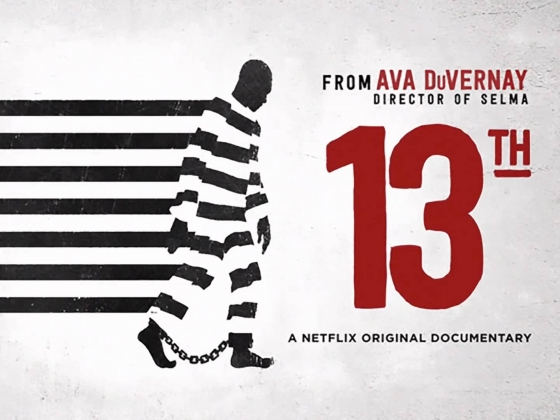
Takeaways: 13th


13th poster

This was, by far, the hardest watch yet.  I Am Not Your Negro was a fluffy hug by comparison.  While not necessarily designed to shock or appall, the information and media used in this film is both shocking and appalling, and I was HURTING by the end of it.  So, for those squeamish, fair warning. 

Like a lot of average Amerian kids, I grew up with the white-washed version of history:
Slavery happened, back in the dark ages,
segregation was terrible,
the civil rights movement fixed it,
thank god- lets move on.

I didn't experience a massive amount of white guilt in learning this Disney-version of history because that's exactly what it's designed to do: help white people forget the horrors of the ancestry of this country.  Regardless of whether or not there are slave owners on your family tree we all live here and unfortunately the sins of the fathers are passed down to ALL of us.

The ACTUAL history of slavery in America, I have now learned, is this:
Slavery happened, in an America so much more similar to the one we currently live in than anyone would like to admit,
and never... actually went away.
It changed form, and now the systems that support it are so deeply ingrained in society that the only way to actually fix it is to rebuild... pretty much everything.

WHAT!?!  Pretty fucking horrifying.  John Oliver related it to the shock many experienced when learning about the Tulsa massacre from watching Watchmen.  I've heard the expression "waking up white"- I think that's what this feeling is.

To learn that the absolute worst period of American history is not in any way, shape, or form actually history caused me actual physical pain.  I was at times nauseous, tearful, clenching, fidgeting, and ultimately drained by the end of it.  And that's an appropriate response, I think, to discovering just how truly horrific the state of this country actually is.

So, here's what I learned:  As soon as slavery 'ended', white supremacists (who did not stay in the south) extorted a loophole in the constitution- the 13th amendment (thus the title of the film) which states:
"Neither slavery nor involuntary servitude, except as a punishment for crime whereof the party shall have been duly convicted, shall exist within the United States, or any place subject to their jurisdiction." 

This enabled the re-enslavement of black humans by the thousands under the guise of protecting communities from "criminals" after blacks were arrested (often for nothing at all) and used as free labor through convict leasing. In order to prevent the majority from becoming sympathetic to the plight of these "criminals", the media created the false narrative that black men were dangerous, violent, and actively looking for ways to harm the whites they resented for their past treatment and thus the black man = criminal myth was born.

The word criminal comes up in this film so much that I actually started to get a bit sick of it.  But I recognize what they're trying to do: point out how deeply ingrained this idea is within the entirety of the American psyche.  Countless psychological studies have proven that the average white person, regardless of their actual beliefs about race, will label a black man as suspicious when shown a series of neutral photographs of different races.  And there's an automatic, unspoken assumption that is deep within the mind of everyone who lives in this country- regardless of whether or not we recognize it.

This brainwashing is so destructive not only to people like me who grew up unaware of the racism I was trained to believe, but to the black identity in and of itself.  As one of the scholars pointed out: "So you have educated a public deliberately, over years, over decades, to believe that black men in particular, and black people in general, are criminals.  I want to be clear because I'm not just saying that white people believe this, right?  Black people also believe this and are terrified of our own selves."

Fuuuuucck,  Anyway, back to history: media continued to influence the American psyche and got a particularly big boost in 1915 with the release of "The Birth of a Nation" which depicted black men as, you guessed it, criminals and rapists and white supremacists- the KKK specifically- as heroic forces preserving the value of the American way of life.  (Horrifying fact: this was the first film in history ever to be screened at the White House.)  As a result of the popularity of this movie, people flocked to join their local chapter of the KKK and lynching became a fun evening activity for a lot of people who believed they were simply helping to keep their communities safe.

When this murderous form of racism became unpalatable to the average American, segregation was created as a solution to the problem.  I think most of us got some education on the horrors of segregation and Jim Crow laws but were also taught that the civil rights movement ultimately solved all the problems of this time.  Fun fact:  it didn't.  The 1964 Civil Rights Act and 1968 Fair Housing Act were supposed to end segregation, pay inequality, and discrimination by businesses and public facilities.   Housing is still very much segregated as are schools (no longer by force but by economic inequality).  The pay gap between white and black Americans is larger now than it was in the 60s when the civil rights movement was in full swing.  And discrimination by businesses is still rampant in this country and has been emboldened by the current sitting president and other outspoken white supremacists.

The Voting Rights Act was supposed to end gerrymandering  (it didn't), voter discrimination (it didn't), and voter suppression in general ultimately failed to end any of those practices that still very much take place today.  And thanks to the fact that any individual convicted of a federal crime is ineligible to vote the whole black man = criminal myth pretty much all but guarantees that voter suppression remains intact.  Which brings us back to crime.

The film then goes on to explain how being "tough on crime" became one of the core requirements for anyone, regardless of political party, to get elected.  They site specific laws advocated for and enacted by Nixon, Reagan, George Bush Sr., and Clinton and give the statistics on the number of jailed individuals going up by 200k increments, then a 500k increment, and finally a 1 million increase each decade since 1970.   And 40% of those now more than 2.2 million prisoners are black.  (That's in 4 black people in the country.)

With so many people in prison, and so many billions of dollars going into the creation of prisons, this birthed the prison industrial complex.  To learn that this complex is not only a multi billion dollar industry but that there are several legal systems in place which support it was disturbing on a level I was previously blind to.  And the fact that 97% of prisoners were sentenced by plea bargain rather than by trial ensures that this will continue.  Not to mention the legacy of police racially profiling and outright murdering black people.  We are living in the age of mass imprisonment.  The way that things were after the civil war when people were arrested, quite literally just for being black, and then imprisoned by a system designed to keep them in jail, and used as free labor while there- well, that's exactly the way things are now.

That's the primary point of this movie- slavery never really ended in the United States.  It simply changed forms.  It was always an economic institution first, driven by racism and white supremacy, and it still is.  And given the amount of profit the current system makes, it has become that much more difficult to try to dismantle this multi systemic machine.  Which means that it will take that many more of us fighting it for things to change.

The ACLU, Vera Institute of Justice, Brennan Center for Justice, Critical Resistance, and many, many other organizations have been working hard to make changes on all levels and to empower individuals to fight the systems within their local communities as well.  I as one person may not be able to do much, but there is strength in numbers and if enough of us educate ourselves to the way things really are (and this film is a good way to start that process) and start actually doing something about it, it will have to change.  It has to.

Sunday, August 9, 2020

On Claiming My Own Voice

I am white.  Cisgendered.  Heterosexual.  Able-bodied.  Neurotypical.  White collar.  Middle class.  Suburban American.  All of which can contribute to a feeling of not being particularly special and therefore not having anything particularly special to contribute to a lot of the important conversations going on.  (Black and white thinking, I know, but true.)

I also identify as a suicide loss survivor, mental health advocate, and individual who herself struggles with mental illness.  I work very hard in my role as a therapist to normalize the difficulties my clients face and to enable them to talk about everything from serious trauma and suicidality to every other thought that can make a person feel completely alienated and alone.  And I work very hard on myself in my efforts to not only practice what I preach but also integrate greater levels of spirituality and universal compassion.  All of which leads me to feel like I have quite a lot to say on the subject of mental health and its countless intersections within all of those aforementioned important conversations.

In the end, though, the most accurate term I can use to label myself (for as useful as labels can be) is human.  I think that best captures all the similarities and differences.  Not only of myself, but of everyone.  Human describes all people on the planet regardless of what they do or don't identify as.  And therefore dehuamization in any form is what I hate the most.  And one of the most dehuamizing experiences a person can have is being denied their voice.  Especially when the person denying it is them.

So regardless of how special or completely ordinary I may be I have to speak out.  About what I know and what I don't.  I have to share information and ask questions.  I have to point out what the world looks like from within my own skin and try to get a better understanding of what it looks like from inside others'.  I have to amplify my own voice and also hand the mic over to those being silenced.

It's not about being special.  If I believe in human rights then I have to believe in my own.  Especially the right to my own voice.

Saturday, August 8, 2020

The Cycle of Grief

First, the trigger: John Oliver informing me about an entire culture being systematically eradicated in China.  Chinese Uighurs- have you heard about this?  If not click on the link below.  But be warned: it's pretty fucking brutal.

https://youtu.be/17oCQakzIl8

Here was my reaction-

Phase 1: Cynicism
Usually my first go-to.  My brain can't fathom what I'm hearing and in an initial reflexive defense move goes straight into cynicism.  These are the thoughts: Well, figures. Of course there's an entire culture that's being thrown into what are basically concentration camps.  It's certainly not the first time this has happened and it won't be the last.  Humans are such shit.

Phase 2: Anger
As Brené Brown points out, anger can be way more comfortable for a lot of us because it feels empowering.  Self-righteous rage feels a shit ton better than what comes next.  It sounds like this: Why isn't anyone doing anything about this?  How the fuck is this happening now?  We have to shut down Nike and all the other companies that are capitalizing on this bullshit NOW!

Phase 3: Despair
The most painful phase and one that can trigger a full-on "life is pointless" thought spiral if my brain gets away from me.  It goes like this:  What the fuck can I do?  Is this just going to keep happening because no one gives a shit?  How can I possibly help?  I'm so fucking useless.  If I were more active I'd find a way to do something but I'm such a lazy piece of shit I guess I'll sit here being appalled.

Phase 4: Blame/Shame
Even with all the work I do on self compassion it's still a trap I fall into.  It feels like this: Nice work, Bev.  Like life isn't hard enough right now without you putting yourself through this?  Do you fucking enjoy feeling this way?  Like it's going to help, really?  You're so fucking stupid.

Phase 5: Self- Compassion
I'm incredibly grateful that this has become as automatic for me as it now is.  It'd be nice if it came along faster in the process but I'm trying to appreciate that the pain I go through en route serves a purpose.  The self talk goes: That was really hard to hear.  Of course I feel powerless, anyone would.  I'm not a bad person because I don't know what to do.  I bet I'm not the only person who feels this way.

Phase 6: Action
Sometimes I think the internet is a horrifying cesspool of the absolute worst impulses of humanity.  Other times I thank fucking god that I have the true magic of being able to literally google the phrase "How can I help the Uighurs?" and instantaneously gain access to people who have already done the leg work for me, like this Muslim woman who provides a whole list of links to petitions I can sign, organizations I can donate to, and other resources I use to do something:
https://www.amaliah.com/post/57754/six-ways-can-help-uyghurs-muslims-china-right-now

I sign a couple of petitions, make a donation, feel a little bit better.  My initial cynicism pops back up for a second and I think "Like that'll do anything" before my self-compassion rationalizes "something isn't nothing."

Wednesday, July 29, 2020

Coming Soon: A New Blog

It's been 4 long years since I gave up on this.  I've lost count of the number of times I considered re-launching.  Every time I did, I was struck by the reasons I gave up on it in the first place and despaired.  So why re-launch?  Because this is a completely different blog.

I did my best to write my manifesto in the about section.  But put simply, this will be a blog about my growing pains in my journey to become a better person.  I'm going to write about what I'm doing to change all these parts of myself that I normally hide because of shame.  It's all that Brené Brown I've been reading: this is vulnerability in digital form.

My hope is that by giving myself permission to write this for me I will avoid all the traps I fell into last time: worrying about how many visits I got, the comments I got on each post- the popularity, basically.  I'm sad that I let that take me down last time because there were moments when this thing was really good for me.  Hopefully it will be again.

So here goes...

Monday, October 4, 2010

The Unanswerable Question

Mr. Charles Wilkes saw himself as one of the few remaining ‘true believers’. He didn’t teach because of the pay which was considerably better than many other professions. Or because he loved kids far more than adults who he saw as lacking the nympholepsy for life that children naturally possessed and which kept them in state of unending curiosity. Or because of the summers off which allowed him to continue working on his unpublishable novel while sleeping late and catching the occasional thunderstorm on the beach.

No, he taught because he genuinely believed in teaching the next generation, in the ability of inheritors to make a change with what is passed down. He taught because he honestly loved it. And it was this, he thought, that made him a good teacher. It wasn't because he was “cool” and let the kids call him Charlie. It wasn’t because he rewarded good grades with baking parties or class trips that were purely for fun. It wasn’t even because of his bonus questions.

He had devised the bonus question system years ago as a way to allow children to naturally let off the steam they needed to let off at the end of a test. After handing out the exam and allowing the allotted amount of time for the students to enter their answers he would collect them back, hand out a few blank pieces of paper to each child, and then raise the projector screen to show the hidden question on the board.

His questions weren’t brilliant, he was the first to admit. But they allowed for a great deal of imagination and creativity which he desired above all other qualities. Especially because you didn’t win by getting the question right, you won by coming up with the most creative answer you could devise in five minutes.

The student who answered “A little boy and a stuffed tiger” to the question “Who are Calvin & Hobbes?” scored no points. A student who answered “Two famous philosophers” also scored no points. No, the entry that won was the little boy who answered “Calvin was a famous jet fighter pilot who single-handedly turned the tide of the Great Indo-China war of 1741 simply because he loved the crumb cakes of a famous baker named Hobbes and didn’t want his bakery to be destroyed in the war. Oh, he really liked his black and white cookies, too.” That little boy was Alexander.

Alexander won far more often than any other student in the class simply because his answers were so intricately woven in such a short period of time and never took the obvious into consideration. He won for drawing a complex diagram in answer to the question “What would chairs look like if our knees were on the back of our legs?” He won for writing a recipe with several difficult steps in answer to the question “How do you make a flying melon?” And he won for creating a series of dance steps in answer to the question “What is an elastic conversion?”

Partially because Alexander won so often, and partially because he was a good student the bonus test points originally offered as reward became boring and Alexander asked from something different. After a brief discussion, the class concluded that in reward for answering the question the winning student should be able to ask the teacher a question in return.

In the beginning, Charlie got some boring questions like “How do you skin a cat?” and “What is the air-speed velocity of unladen swallow traveling through the forest at noon?” which didn’t require too much thought and ended up with answers that seemed to rival Alexander’s, at least to Charlie.

But one particular afternoon, after learning that he was once again the winner of the bonus question, Alexander got a very serious, very concerned look on his face. His brow furrowed, his lip tucked firmly between his teeth and his thumbs furiously circled each other as Alexander looked down at his desk and sat in silence. Charlie was enticed by this, expecting that the boy was coming up with a masterful conundrum for him to solve. After what seemed like far longer than his fellow students could possibly bear Alexander nodded his head and looked up to his teacher with a determined expression.

“Ok, Charlie. I have a real question. One that I haven’t been able to get a straight answer from out of anyone.”

At this Charlie’s heartbeat jumped and he tried to brace himself for what seemed like it would be something completely inappropriate for a class of 8th graders.

“Why,” Alexander continued, “do we die?”

The class turned in anticipation to look at the silent teacher in front of the room. Charlie considered the young boy standing at his desk. He knew the look in his eyes as it was one he’d had himself many times. When you look to an adult you respect and hope that they will be honest and tell you the truth that you need to hear. When you wait for a piece of invaluable information to be dispensed.

Unfortunately for Charlie, he didn’t know a deserving answer. He could refer him to a science lesson about how the cells of the human body break down over time or point him in the direction of a philosophical discussion or tell him to ask his parents what their religion teaches them or cite some old country expressions his grandmother used to tell him which always seemed profound. But none of those would have given him the answer he was seeking. So, he told him the only answer that would treat the question with the respect it deserved.

“I don’t know,” he said.

Friday, October 1, 2010

Zen in everday life

Portrait of a moment in time:

A young woman sits at her desk, buzzing with caffeine and nervous energy, eying her phone nervously. She is clearly trying not to focus on the phone: she searches the binder in front of her for information, enters it into her excel sheet, strives to work productively. But her eyes involuntarily wander back to the phone.

She picks it up, checks for voicemail. There is none. Of course there wouldn't be, she thinks to herself, it didn't ring. She puts it back down and mentally chastises herself.

The phone rings. She jumps, fumbling to answer it. Her light eyes instantly dull as she realizes it is not the call she's been waiting for. And so the day moves on... This young woman is me, of course. And this moment in time is my Friday.

I've studied the power of now. I've talked about living in the moment. I've even studied buddhism at a monastery when I was younger: learning to meditate, trying to imagine life outside of the realm I know it in. During calm periods of life I've actually lived in the moment- for a moment or so. I've always thought, in that way that someone who isn't a buddhist monk might think, that if I spent all day everyday mediating and studying the words of those much more enlightened than me, and had nothing more to distract from these practices than sunlight, wind and the occasional chirping of a grasshopper that I might be capable of reaching satori, too. (Maybe even nirvana, eventually.)

But I don't. My life is real. I have nothing but attachments to the physical world. Every second of everyday I am constantly pulled into it, like gravity. Sure, you can jump- but you always come back down to earth. It makes sense that monks must seek such a simple existence in order to achieve enlightenment: there's just too much noise otherwise.

So I think that hoping for a higher way of living that would somehow allow me to walk the path of enlightenment while still living in the real world is just too tall of an order. At least for me.

No, I think the key that I should seek is not to understand the true nature of existence. I think what I should seek, and what I might actually have a shot at, is being at peace with NOT KNOWING.

Not knowing when or if I will get what I want, what my life will look like in the future, how I will handle the challenges I face, or what the hell it all means. To know, in an enlightened way, that I DON'T know and to be ok with that? Now that's enlightenment worth seeking.

Thursday, September 30, 2010

Alive! ...and writing again

Any of you who have still bothered to check the site over the past several months of my absence have probably wondered where I’ve been. Well, I’ll tell you.
On a whim, I joined a Uruguayan rugby team. You know- for shits and giggles. Well, wouldn’t you know that right on the eve of the first big match our plane goes down smack dab in the middle of the Andes mountains. A whole butt load of people died and those of us that survived did so by resorting to acts no human being should ever dream of, let alone perform. Oh, and it was freakin’ cold, too! But, I survived. Safe to say, I’ve quit rugby.
So, that’s what I’ve been doing…. Or it may be some book I read a while ago. Whatever.
Either way, I’m back. And it’s getting to be that time again. Time to gear up for my favorite holiday and for the biggest writing challenge I’ve taken on in my life thus far. No, not the Pulitzer Prize but NaNoWriMo! I live with the belief that if I did it last year I can do it again.
But, it’s only a month away and I’ve got a lot of warming up to do if I expect to be able to pump out well over 1,000 words a day! So, towards that end, I have selected a warm up challenge for myself to perform over the next month.
It starts with the aid of a favorite site of mine, Dictionary.com. Despite having gone to a good school with some of the most intelligent and well-read people I’ve ever met my vocabulary is still limited. So, in order to improve my vocabulary I signed up for Dictionary.com’s Word of Day in which they send me a random word and definition every single day.
Since it’s common knowledge that you have to actually USE a word in order to absorb it I plan to use each “Word of the Day” for the month of October. One word, everyday, for the next 31 days.
In order to give myself room to experiment and to warm up writing muscles which have atrophied from inactivity I will attempt to use more than just one sentence to house each word. I’ll do random blog entries about various observations or thoughts, try to throw some short stories in there, some non-fiction, some outrageous fiction, some holiday-based entries (it is October, after all) and maybe even a poem or two.
I promise nothing about quality or clarity, simply to use the word in a way that demonstrates my understanding of it. I’ve added a link on the side so you can check the definition and judge whether or not I’ve used it correctly.
Should I complete this task I should be in pretty good shape to start NaNoWriMo on November 1st and actually stand a chance at crossing the 50K word mark by the end of the month.
So, if you’re at all interested, stay tuned! You can be literary judges, hecklers, cheerleaders, whatever. I’ll happily read any comments you post (and promptly delete them if they are links to Japanese porn sites*_*).
Wish me luck, everybody!

Thursday, April 22, 2010

The Beveled Edge is Back!

I know what you're thinking: It left?  I'm pretty sure there were only two people reading this thing before, and I'm pretty sure they were doing it out of obligation for a friend.  Not just because my crap wasn't all that impressive, but because I started writing less and less.  You could log on once a month and catch up on everything new within a minute.  So why re-vamp it?  For my own selfish reasons.  Maybe I feel like writing down the random stuff in my head instead of just thinking it.  Maybe I like the medium.  Maybe I'm just a glutton for punishment.  I don't know.  Whatever the reason, though, it's back.

So why did the last version fail?  Well, many reasons.  Number one: I modeled it after the blog of a friend of mine who, unlike me, is an extensively educated, exhaustively practiced and frighteningly skilled fiction writer.  I came to the conclusion very quickly that it would take me years of practice and far more innate talent than I have to be able to write like him, and yet I still tried.  It's never a good idea to try to copy someone else's art.

Number two:  I held myself to a posting frequency standard that just wasn't feasible for me.  Which is why this time around I'm not going to make any claims to posting frequency.  If it happens once a week, great.  Once a month?  OK.  A few in a row?  Awesome.  But if I'm fried at the end of the day (which I am more often than not) and can't come up with anything, fine.

Number three, and most relevant to the new set-up of the blog:  Fiction isn't my forte.  Would I like to get better at it?  Sure.  But can I realistically expect myself to come up with something new and actually worthwhile every time I write?  Not a chance in hell.  I like fiction, I do.  But I've noticed a pattern in myself.  I tend to get into an idea, a story, and live there for a while.  Get to know the characters: their traits, their quirks, their failings, etc.  Plot is a secondary interest.  This probably doesn't make for good storytelling, but I've given up my dreams of being published.  I've also given up my dreams of coming up with short, interesting, funny, or in other ways worthwhile stories on the spot.  Doesn't work for me, so I'm gonna stop trying.

So what am I gonna do?  What the subtitle says: "Random musings".  My thoughts, my impressions of various things, my opinion, just random stuff.  Maybe every now and again some fiction will find its way in there.  But I'm not gonna force it.  I'm gonna write whatever the hell I feel like writing which is, quite arguably, what I should've done in the first place.

Will it be interesting to read?  I haven't the foggiest.  And for the first time, I don't really care.  Although I have not done the research to back this up I'm pretty confident that there are a lot of blogs out there containing much stupider shit than this one will.  Will it be as good as many?  Not a chance!  Will it be as bad as some?  I don't think so.  It'll be whatever the hell it will be and I will, for the very first time since starting it, leave it the hell alone.

If you want read it, have at.  If you don't, keep clicking to the next blog.  If you like it, awesome.  If you don't, oh well.  Maybe it'll evolve into something worthwhile.  Maybe it'll deteriorate into something so stupid even I can't stomach it.  I'm not gonna predict either way.  I'm just going to write, and see where it goes.  It worked for NaNoWriMo.  When I forced myself to let go of the idea of what I thought my story should be it actually started coming out.  When I tried to fit it to some ideal in my head it stalled, every time.  So I let it go, and I'm sure that in the pages and pages of crap there is actually some worth while stuff.  Maybe in the many blogs that are to come they'll be something else worthwhile.  I hope so.