Pages

Showing posts with label Societal Ponderings. Show all posts

Friday, August 14, 2020

Takeaways: 13th


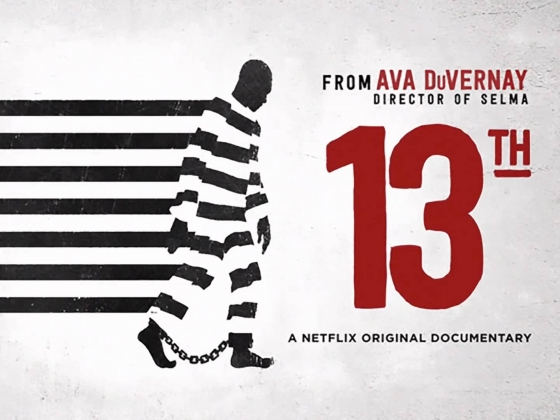
13th poster

This was, by far, the hardest watch yet.  I Am Not Your Negro was a fluffy hug by comparison.  While not necessarily designed to shock or appall, the information and media used in this film is both shocking and appalling, and I was HURTING by the end of it.  So, for those squeamish, fair warning. 

Like a lot of average Amerian kids, I grew up with the white-washed version of history:
Slavery happened, back in the dark ages,
segregation was terrible,
the civil rights movement fixed it,
thank god- lets move on.

I didn't experience a massive amount of white guilt in learning this Disney-version of history because that's exactly what it's designed to do: help white people forget the horrors of the ancestry of this country.  Regardless of whether or not there are slave owners on your family tree we all live here and unfortunately the sins of the fathers are passed down to ALL of us.

The ACTUAL history of slavery in America, I have now learned, is this:
Slavery happened, in an America so much more similar to the one we currently live in than anyone would like to admit,
and never... actually went away.
It changed form, and now the systems that support it are so deeply ingrained in society that the only way to actually fix it is to rebuild... pretty much everything.

WHAT!?!  Pretty fucking horrifying.  John Oliver related it to the shock many experienced when learning about the Tulsa massacre from watching Watchmen.  I've heard the expression "waking up white"- I think that's what this feeling is.

To learn that the absolute worst period of American history is not in any way, shape, or form actually history caused me actual physical pain.  I was at times nauseous, tearful, clenching, fidgeting, and ultimately drained by the end of it.  And that's an appropriate response, I think, to discovering just how truly horrific the state of this country actually is.

So, here's what I learned:  As soon as slavery 'ended', white supremacists (who did not stay in the south) extorted a loophole in the constitution- the 13th amendment (thus the title of the film) which states:
"Neither slavery nor involuntary servitude, except as a punishment for crime whereof the party shall have been duly convicted, shall exist within the United States, or any place subject to their jurisdiction." 

This enabled the re-enslavement of black humans by the thousands under the guise of protecting communities from "criminals" after blacks were arrested (often for nothing at all) and used as free labor through convict leasing. In order to prevent the majority from becoming sympathetic to the plight of these "criminals", the media created the false narrative that black men were dangerous, violent, and actively looking for ways to harm the whites they resented for their past treatment and thus the black man = criminal myth was born.

The word criminal comes up in this film so much that I actually started to get a bit sick of it.  But I recognize what they're trying to do: point out how deeply ingrained this idea is within the entirety of the American psyche.  Countless psychological studies have proven that the average white person, regardless of their actual beliefs about race, will label a black man as suspicious when shown a series of neutral photographs of different races.  And there's an automatic, unspoken assumption that is deep within the mind of everyone who lives in this country- regardless of whether or not we recognize it.

This brainwashing is so destructive not only to people like me who grew up unaware of the racism I was trained to believe, but to the black identity in and of itself.  As one of the scholars pointed out: "So you have educated a public deliberately, over years, over decades, to believe that black men in particular, and black people in general, are criminals.  I want to be clear because I'm not just saying that white people believe this, right?  Black people also believe this and are terrified of our own selves."

Fuuuuucck,  Anyway, back to history: media continued to influence the American psyche and got a particularly big boost in 1915 with the release of "The Birth of a Nation" which depicted black men as, you guessed it, criminals and rapists and white supremacists- the KKK specifically- as heroic forces preserving the value of the American way of life.  (Horrifying fact: this was the first film in history ever to be screened at the White House.)  As a result of the popularity of this movie, people flocked to join their local chapter of the KKK and lynching became a fun evening activity for a lot of people who believed they were simply helping to keep their communities safe.

When this murderous form of racism became unpalatable to the average American, segregation was created as a solution to the problem.  I think most of us got some education on the horrors of segregation and Jim Crow laws but were also taught that the civil rights movement ultimately solved all the problems of this time.  Fun fact:  it didn't.  The 1964 Civil Rights Act and 1968 Fair Housing Act were supposed to end segregation, pay inequality, and discrimination by businesses and public facilities.   Housing is still very much segregated as are schools (no longer by force but by economic inequality).  The pay gap between white and black Americans is larger now than it was in the 60s when the civil rights movement was in full swing.  And discrimination by businesses is still rampant in this country and has been emboldened by the current sitting president and other outspoken white supremacists.

The Voting Rights Act was supposed to end gerrymandering  (it didn't), voter discrimination (it didn't), and voter suppression in general ultimately failed to end any of those practices that still very much take place today.  And thanks to the fact that any individual convicted of a federal crime is ineligible to vote the whole black man = criminal myth pretty much all but guarantees that voter suppression remains intact.  Which brings us back to crime.

The film then goes on to explain how being "tough on crime" became one of the core requirements for anyone, regardless of political party, to get elected.  They site specific laws advocated for and enacted by Nixon, Reagan, George Bush Sr., and Clinton and give the statistics on the number of jailed individuals going up by 200k increments, then a 500k increment, and finally a 1 million increase each decade since 1970.   And 40% of those now more than 2.2 million prisoners are black.  (That's in 4 black people in the country.)

With so many people in prison, and so many billions of dollars going into the creation of prisons, this birthed the prison industrial complex.  To learn that this complex is not only a multi billion dollar industry but that there are several legal systems in place which support it was disturbing on a level I was previously blind to.  And the fact that 97% of prisoners were sentenced by plea bargain rather than by trial ensures that this will continue.  Not to mention the legacy of police racially profiling and outright murdering black people.  We are living in the age of mass imprisonment.  The way that things were after the civil war when people were arrested, quite literally just for being black, and then imprisoned by a system designed to keep them in jail, and used as free labor while there- well, that's exactly the way things are now.

That's the primary point of this movie- slavery never really ended in the United States.  It simply changed forms.  It was always an economic institution first, driven by racism and white supremacy, and it still is.  And given the amount of profit the current system makes, it has become that much more difficult to try to dismantle this multi systemic machine.  Which means that it will take that many more of us fighting it for things to change.

The ACLU, Vera Institute of Justice, Brennan Center for Justice, Critical Resistance, and many, many other organizations have been working hard to make changes on all levels and to empower individuals to fight the systems within their local communities as well.  I as one person may not be able to do much, but there is strength in numbers and if enough of us educate ourselves to the way things really are (and this film is a good way to start that process) and start actually doing something about it, it will have to change.  It has to.

Sunday, August 9, 2020

On Claiming My Own Voice

I am white.  Cisgendered.  Heterosexual.  Able-bodied.  Neurotypical.  White collar.  Middle class.  Suburban American.  All of which can contribute to a feeling of not being particularly special and therefore not having anything particularly special to contribute to a lot of the important conversations going on.  (Black and white thinking, I know, but true.)

I also identify as a suicide loss survivor, mental health advocate, and individual who herself struggles with mental illness.  I work very hard in my role as a therapist to normalize the difficulties my clients face and to enable them to talk about everything from serious trauma and suicidality to every other thought that can make a person feel completely alienated and alone.  And I work very hard on myself in my efforts to not only practice what I preach but also integrate greater levels of spirituality and universal compassion.  All of which leads me to feel like I have quite a lot to say on the subject of mental health and its countless intersections within all of those aforementioned important conversations.

In the end, though, the most accurate term I can use to label myself (for as useful as labels can be) is human.  I think that best captures all the similarities and differences.  Not only of myself, but of everyone.  Human describes all people on the planet regardless of what they do or don't identify as.  And therefore dehuamization in any form is what I hate the most.  And one of the most dehuamizing experiences a person can have is being denied their voice.  Especially when the person denying it is them.

So regardless of how special or completely ordinary I may be I have to speak out.  About what I know and what I don't.  I have to share information and ask questions.  I have to point out what the world looks like from within my own skin and try to get a better understanding of what it looks like from inside others'.  I have to amplify my own voice and also hand the mic over to those being silenced.

It's not about being special.  If I believe in human rights then I have to believe in my own.  Especially the right to my own voice.

Monday, August 19, 2013

What I Learned From The Summer of Weddings


Well, I survived.  The summer of weddings is officially over.  And though I’ve still got one more wedding to attend in October it will be nothing like the ones I’ve been to thus far.  No more three-day events, no more tux rentals and no more best man speeches (though I will say we had another great reaction from the crowd with this last one and I am so, so proud of Dave).  And at the close of this very challenging period I can’t help but reflect.

 Without getting too personal let me just say that it’s incredibly difficult to go to a flood of weddings when you yourself are unmarried and wishing you weren’t.  Granted, I wasn’t trying to survive these dateless and that seems even harder, so gratitude where gratitude is due.

It’s strange what weddings bring out in people.  I, being unmarried but happily committed, end up thinking about what I would want in my own wedding.  People who are married reminisce about their own nuptials and compare and contrast what was good about the wedding they’re at and what they liked better about their wedding.  Single folk just try and enjoy the party and pray that they won’t be harassed by too many folk wondering when they’ll finally meet Mr. or Ms. Right themselves.  My point is: everyone’s thinking about weddings.

It’s one of the most conforming experiences I’ve encountered in adult life and it’s so impossible not to get sucked into it.  And to be perfectly honest let me just come right out and say that for someone who likes to consider herself as being unique and different I totally failed to stay above peer pressure this summer.  I had my freak outs and my poor sweetie had to have a lot of conversations with me to try to calm me down and remind me of that.  (“Do you really want to get married just because everyone else is?”)

It’s got me thinking a lot about how much time I spend, in general, comparing myself and my life to others.  And I think that some of the insights I’ve gained are worthwhile. (Even if they’re the same lessons I’ve been trying so hard to learn since I started this whole crazy journey.)  Here they are:

Society, at least here in this country, is designed to acknowledge only the big milestones.  Graduations, housewarmings, marriages, births, deaths and maybe a milestone birthday or anniversary- but that’s about it.  You figure out how to finally balance your checkbook after years of perpetually overdrawing your account and people will look at you sideways if you throw a party for it.  You make some huge breakthrough in therapy that allows you to not have a panic attack when driving through a tunnel and people will be confused if you brag about it.  You reach some giant epiphany regarding yourself after some really tough life challenges and people will refer to you as a crazy hippie or some such dismissal if you try to talk to them about it.  There are no celebrations for those individual, unique events.

And yet, those are a heck of a lot more important in the grand scheme of things then the big milestones.  Why?  Because they are unique, they are yours.  There aren’t commercials and websites and how-to guides for those things.  Not everyone has them because they’re just yours.  They make you you.

I have to wonder if I’m just too American to really grasp the value of the culturally significant milestones.  Perhaps I’ve been brainwashed by so much false romance and epic storytelling around individuality.  Maybe in other cultures where conforming is actually a valuable and respectful action there’s a much more gentle attitude towards shared events.  I’m sure I would see things very differently if I were from, let’s say, the Gansu province of China.

But I’m not so I can’t really imagine how they see the world.  I only know how I see it and from my viewpoint it’s littered with weddings and baby showers and the like.  And that’s why conformity is so hard to escape.

Because if you reach one of those milestones everyone will approve of it.  Not just the people you’re inviting to the event, but everyone.  No boss ever questioned why their employee was requesting two weeks off for their honeymoon.  You get a free pass about a variety of odd behaviors if you explain that you’re a new parent and subsequently super stressed.  People expect you to go a little nuts when preparing for any big event like that.  There’s acceptance.

But for the things that only you go through, people don’t understand.  You get a “Good for you” for a therapeutic breakthrough rather than a “That’s wonderful.”  People assume that they don’t know what it’s like so they don’t try to.  And it can be rather lonely in that way.

Plus, without the culturally significant milestones, how do you know you’re doing the “right thing”?  I watched a TED talk not too long ago where someone spoke about how the more alternative lifestyles are accepted the harder it becomes for people to choose.  When there’s only one way of doing things you have a goal in mind and a clear, distinguishable way of knowing you’ve reached it.  Graduate, buy a house, get married, have a baby, send out Christmas cards and show off pictures of your kids little league games- everyone understands these things.  But the paths less traveled?  People don’t know how to evaluate those, they don’t know how to measure them.  So there’s no “atta boy”s coming your way and you have to know for yourself that you’re doing the right thing.  Well, I’m gonna come right out and say it: that is NOT easy to do.

To forge your own path, to measure your own worth, to really not care what other people think of you- that is NOT easy.  We get rewarded for conforming.  We get stories and whispers and urban legends for walking our own path.  Like the great artists- mental illness and tragedy is so common for them many people actually associate that with creativity.  But those people didn’t seem too happy to me.  All that individuality didn’t afford them any contentment.  And as many people talked about them and their epically tragic lives I don’t think many people really knew them.

But then again, maybe that’s really what marriage is supposed to be all about.  Beneath the flowers and cake and parties; beneath the favors and formal wear and beneath the stares of strangers who technically only see it from the outside it’s really about something rather personal.  It’s about pledging to bear witness to the life of someone else.  To be there for not just the big events, but the tiny victories and tragedies alike.  To cheer for their accomplishments, comfort them in their freak-outs, fight with them in their battles and stand with them in their storms.  As much as the event itself may fall into a million different conventions the life that comes after is still unique, and you’re vowing to share it with someone.

Perhaps all my attitude about it this summer is simply because I’m still just one of those people seeing it from the outside.  And perhaps that’s why, even after all of this, I still want to go through it myself.

Because when it comes down to it, I’ve already got a partner.  We already share the victories and tragedies, we struggle through the challenges together and we cheer for each other when we succeed.  I’m already living the life I want to live with my mate.  And someday, in our own time- when it’s right for our story- we’ll have our friends and family celebrate it with us.  Not conforming, just agreeing that a wedding is a nice way to mark the significance of our story.  And without rushing it, I look forward to seeing it from the inside.

Wednesday, December 12, 2012

Tis the Season

I’m not religious so I’m not at all insulted by the much bemoaned lack of Christ in Christmas.  Nor am I that deeply enamored with the holiday in general.  In all honestly, Christmas has been on a downhill slope ever since I found out Santa Claus wasn’t real.  (Which, needless to say, was a pretty long time ago.)  However, I do tend to get sentimental over holidays that are fabled as being a time for family togetherness and the warm fuzzy feelings that come from basking in the glow of your loved ones.

It is because of this that I still get a little caught up in the holiday season.  I still put up a tree, still decorate my office at work, still order Christmas cards with disgustingly adorable pictures of my dog plastered across them, still bake cookies and pies and other assorted holiday goodies and still buy, wrap and give presents to the people I care about. 

But even I, with my lowered expectations given the removal of the mythical man and constant attempts to self care in hopes of avoiding making myself nuts with the whole thing, have been feeling a bit overwhelmed this year.  I don’t necessarily think that the capitalist machine that runs this great country of ours is on anymore crack than usual, but that's not saying much given that the usual amount of crack is A LOT.  Granted, no one got maced on black Friday this year but people still got trampled, shoved and injured in the truly horrifying rush of shoppers.  People are still going bankrupt trying to pay for all this crap.  People are still stealing, car jacking and committing other illegal acts in order to obtain gifts.  And people are still being unabashedly bat-shit crazy in general.

As much as I try to avoid commercials, ignore the holiday catalogs clogging up my mail box, stay away from the mall whenever possible (which is not easy when the mall takes up about two thirds of the land mass of the town you live in) and otherwise shelter myself from the madness I can’t help but ask the question that many other people have been asking for years: is this really what the season’s all about?

I mean, that's been the biggest source of stress.  Mainly the money and not having enough of it.  But also the fear that what you got that person isn’t enough.  Which, of course, drives you to buy more in attempts to fix that.  Which brings you back to the issue of money.  It’s a vicious cycle.  And because I’m that kind of a person, I can’t help but think that I’m being brainwashed into participating in the whole cycle in the first place.  I’m plagued by the thought that perhaps I should just hand-make some really loving cards for everyone and nix presents all together.  Lord knows it would save a lot of headaches.

But part of me still likes wrapping up that box, handing it to that person, and seeing the expression on their face when they open it.  It makes me happy, I can’t help it.  However, I don’t want to go broke doing it.  And I especially don’t want to go broke because of some mass-produced external pressure to do so.  I am much like the turret pleading “I’m different!” in my own little voice.

So perhaps I need to find another way to try to get some of the warm/fuzzy feeling that comes from giving.  And we all know that giving without receiving is always a good way to give your soul some much needed TLC.  Given that fact, I am struck by the staggeringly large number of ways to do just that this time of year.  Toy drives, food drives, coat drives, blanket drives, blood drives and pretty much every other type-of drive you can think of are abundant right now.  Just about every organization in existence is eagerly accepting volunteers to visit with a senior, serve food to a homeless individual or donate their expertise in accomplishing a particular task.  Not to mention the fact that a large part of the Atlantic sector is still in a state of emergency because of the giant storm that struck a month and a half ago and they desperately need help. The possibilities are near-limitless and I’m guaranteed a bigger bang for my buck if I spend it on non-perishable goods rather than another present for a family member who probably won’t remember it in a month’s time.

So if you’re at all like me this holiday season, I remind you of the same thing I’m reminding myself of: the season is about giving, not buying.  So whether it’s dropping off a grocery bag full of food, a garbage bag full of old coats, a box of toys, a pint of blood or simply some time you’ll be doing good.  And our world could really use some more of that in the midst of all this madness.

Saturday, July 23, 2011

Statistics

It was like falling in love, only backwards. The same sudden, impulsive reactions occurred. Except that now the things he had originally had an abrupt, strange attraction to inspired an oddly strong sense of revulsion in him.

The way she tapped her fingernail on her front teeth as she sat with a bemused expression now annoyed him beyond any reason. The way she hummed under her breath when she was making her coffee in the morning inspired a nearly overwhelming urge to snap out a warning to shut up. Even the light snore which he once thought adorable and endearing now sounded like nails on a chalk board.

It made no sense to him and the more deeply he thought about it the more irrational it became. He loved her, he was smitten with her, he was devoted to her. And yet as time passed he felt the feeling grow.

He tried talking himself out it but logic didn’t work on irrational impulses. He tried hating himself since it was obviously his fault. But that solution didn’t fit as it made him withdraw from her even further. He tried planned romance but found it nearly impossible to enjoy himself. And in the end he had yet another failed marriage under his belt.

Monday, January 3, 2011

Forgive Me for a Moment While I Wax Philosophical

I figured out last year, as part of my big break-down, that my life plan was not going to work out. I imagine this revelation has hit many people over the course of their lives so I don’t see myself as terribly special for having had it (especially because I’m reading a book about how it is the common life passage of everyone around my age).

The thing that surprises me is that I figured out that it isn’t simply my life plan that didn’t work out. It’s that life plans, in general, never work out. What’s that John Lennon line? “Life is what happens to you while you’re busy making other plans”? I always loved that line. So profound, yet simple. (The most profound things usually are.)

I get that, truly, for the first time in my life. Whatever my job, wherever I live, whoever I try to secure relationships with- nothing is guaranteed. My health may vanish before I recognize how lucky I am to be healthy and able-bodied. My job might be taken away from me despite my best efforts and innate abilities. My house could (god forbid) burn down. My car could be stolen. The people I love could die, or just change into people I don’t love anymore. Nothing is guaranteed.

As I list off all these vital things that may vanish in a second’s time I may sound like someone who doesn’t really get it- how devastating it is if these things do happen. And I agree that of the list I’ve only experienced a few. But I’ve experienced enough to believe that last statement. And, amazingly enough, I think I’m beginning to actually accept it.

The whole job thing, for example. I used to think the whole 9 to 5 thing wasn’t a choice, it was a survival tactic. It was something you had to do. And yet, all around me are people who have made a living and continue to do so by working in areas I never thought of as real jobs and in areas that are as far removed from an office as you can get. Not to mention that me with my safe 9 to 5 got screwed over like everyone else, so I know that doesn’t actually work.

I’d like to say that, knowing all this, I have the bravery that comes from knowing you have nothing to lose. And yet, as I look for another job I find myself searching in offices, preferring schedules that resemble 9 to 5. Is it fear? Partially, I’m sure. Habit? Again, it must be partially that, too. But the main reason is that, even though I KNOW from experience that the whole 9 to 5 office life doesn’t work, I don’t KNOW what does.

And there’s the rub, as they say. You can do the leg work, collect the evidence to disprove your world view and your operating theories about how things work. But you can’t destroy an entire belief system without replacing it with something else. Once you wipe the hard drive you have to put on a new operating system in order to get anything done.

So that’s where I am- trying to find a new operating system. It’s scary, for sure. I don’t know what to believe. And because my previous OS crashed and burned so painfully I’m trepidatious when examining new beliefs, understandably so. I don’t want to fully buy into anything because I don’t want it to blow up in my face.

My fear, I think, makes perfect sense. You get burned, you handle with care next time. What doesn’t make sense to me, and what actually confuses me, is how everyone else around me is continuing on with their life plans as if nothing’s changed. Getting married, having kids, getting excited about new jobs… Despite my disillusionment the American Dream continues, unabated. Except that now as I watch those around me pursue theirs I don’t feel envy anymore. I just wonder when it’s gonna blow up in their face.

Perhaps this is just another phase in the process…

Thursday, October 21, 2010

Real Vampires

As a long-time fan of the vampire genre I can't help but be appalled at what has happened to the vampiric costumes this year. I tend to browse online for the year's costume fads for fun and i've noticed a disturbing trend of skinny, emo-looking boys wearing white cake make-up and spiked hair and claiming to be "Edward". WTF?
As if the books themselves weren't insulting enough you're actually encouraging people to dress up like the pansy characters? What do you do to get in character? Sit around and brood? That is painfully lame!
Vampires are supposed to be powerful, blood-thirsty monsters not angsty, emo boys who look like they dropped out of an Ambercrombie and Finch catalog and suddenly started coruscating!
Where's the fear? Where's the awe at their inhuman abilities? Where's everything that we hold near and dear about the genre? The only vampire movie that's come out in past years that was even remotely tollerable was 30 Days of Night and that wasn't even that good. I mean, at least they were monsters that would rip your throat out and slaughter people for fun! Of course, then brooding Josh Harnett had to go and mess that up, too. (But at least he fried in the end, that was rewarding.)
My point? If you're going to dress up like a vampire this year please, please dress up like a respectable one. The Dracula cape and fake fangs may have been done to death but at least they reflect a time when it still meant something to be a vampire.

Tuesday, October 13, 2009

The American Dream

Today I was listening to one of my clients talk about the beginning and end of his first marriage. He and his first wife, like many people from that generation, married young. Why? Because that was just what you were supposed to do when you were young and in love. There weren't really any other options society approved of.

Just two months into their marriage he got drafted into Vietnam. He did the best he could, sending his meager pay home to his recently discovered to be pregnant wife while watching his buddies die around him. He somewhat miraculously did not end up as a statistic after two years out there and was able to return home.

He was greeted by two strangers, one who he knew long ago and one who he'd never met. He tried to go back to school, using the money from the GI bill to fund a couple of semesters at college. But one income wasn't enough to support a young couple with a baby. And unfortunately his wife had frivolously spent a lot of what he'd sent home. So he quit school and went to work driving a bus.

At that time, and technically even now, that wasn't too bad of a gig. You got great benefits, decent pay, and they were unionized. He was perfectly happy just to be alive with a family and steady pay. She wasn't.

She didn't want to be married to a blue collar worker. All her friends at the bank where she worked wore business skirt-sets and had fancy houses paid for by their white-collar husbands. They had nice clothes and took exciting vacations. They got their hair done and went out to elegant restaurants. She came home to an apartment, a screaming child and an exhausted husband. They didn't talk about this, of course. Because they didn't know each other well enough to talk on an intimate level.

When they married they were defined by family values. After the war he had his family values and a raging case of disillusion with mankind. She had her family values and a voracious appetite for all the pretty things she couldn't afford.

They stuck it out for more than ten years despite being miserable with each other for most of it. They did the customary things couples do when trying to save a marriage- they had more kids, they put money aside for family vacations, they focused on work. And then finally, they gave up. What struck me so much about my client’s story wasn't the tragedy, but the familiarity.

A lot of people don't know that there was a big spike in divorce rates after WWII. Those young soldiers, like my client, came home to wives and places they didn't recognize. And because they were heroes, they got a free pass to do things usually considered taboo. But the financial boom that followed evened things out. There was no financial boom in the 70's. There was a societal revolution. Feminism, racial renaissances, political upheaval and the invention of a little thing called "No-Fault Divorce".

Politicians love to throw around the divorce rate as if it's some sort of proof of the moral decline within our society. I think that's horseshit. Haven't people always, from the very beginning, just been doing what they were told?

Thursday, September 24, 2009

Adult-hood?

With the ever- expanding social awareness of different lifestyles I can’t help but wonder if we’re missing something. It used to be that the path to adulthood was a well paved, meticulously constructed, clearly labeled and well-lit road. You grew up, went to school, got a career, got married, had kids, retired and died. Your kids would do the same, usually before you kicked it. Rinse, lather, repeat. Sure there were some variations. You didn’t have to go to school: you could take over the family business or you could do hard labor- but the job was always in there. And marriage was pretty much a non-negotiable. And everyone who didn’t fit the mold- the perpetual bachelors, the divorcees, the barren- they were all cautionary tales kept on the outskirts to warn growing children of what sad outcome awaited them if they didn’t stick to the path.

Don’t get me wrong- I certainly do not miss those times. I’m glad that people are able to get out of bad marriages. (Granted, I wish they put more thought into getting into them, but still.) I’m glad that people are allowed to be happily single or single parents or cohabiting without marriage or decide not to have kids. It’s good to have choices without being judged for making them. And even if it’s not by choice, things are different. Nowadays the divorce rate is high enough to make most young and reasonably in love people get commitment phobia. It’s more and more common to live with your parents until you’re thirty, forty and so on. It’s not atypical to struggle with dead-end jobs for years while waiting for your ‘career’ to take off because the economy has been ruined by generations before us and no one wants to hire. And you can’t afford a house- another typical adult milestone- because you’re paying student loans you took out to get said career which you’re waiting for.

And what about the people who don’t fit the mold from the beginning? What if you’re born with a physical disability and you can’t work? What if you develop schizophrenia when you hit puberty and your plans get derailed? What if you don’t get the typical opportunities because of your race or ethnicity? What if a million other possibilities interrupt what you’re told life is supposed to be? Is there a plan for those people who don’t fit the mold? I don’t know of any.

So without those milestones which you can’t reasonably expect, how do we know we’ve reached adulthood? I always thought that when I truly became an adult I’d look different. Like there are some genes that take a while longer to mature and when they do you are able to balance check books, keep houses and laundry and dishes clean, keep groceries in the fridge and just basically appear adult. But that’s just what the commercials tell me adults look like, right? It’s capitalism. And with the economy the way it is that definition won’t stand much longer either.

So how do we know? I think that somewhere in the desperate attempts to free ourselves of the fixed cookie-cutter molds that used to keep us in line we lost our gauge. And it’s not just us, either. I used to think that maybe it was just an American thing. Like, if I grew up in Australia or Africa or China things would be clearer. Go out into the outback with some peyote, hunt something on your own to feed your tribe, sit in a tent during your “moon time” and listen to stories from the elders, dance with the other adults around the fire, join another household in marriage, etc. A single ceremony and poof! You’re an adult. But now other countries seem just as screwed up as we are, don’t they? Tribes the world over have gone the way of endangered species and been replaced by cities and businesses and international retail chains.

So what are we left with? When do you know you’re an adult? Is it just something you decide to be? I think I am an adult, therefore I am? And for that matter, when do you know that you’re in any other phase of life? We act like adults when we’re children, we act like children until we die, we joke about being middle aged when we’re in our twenties, we talk about being as young as we feel at fifty, we get more adventurous when we’re seniors and we don’t admit to being old until we can’t move anymore. So when or what, exactly, is the lifespan?