Pages

Showing posts with label Takeaways. Show all posts

Saturday, September 26, 2020

So You Want to Talk About Race by Ijeoma Oluo (Takeaways)

So You Want to Talk About Race by Ijeoma Oluo

I am grateful beyond my ability to express to Ijeoma Oluo for writing this. It is truly a gift to white people who want to learn but are sometimes/often afraid to ask because, as she points out repeatedly, it is not the responsibility of the black person you are talking to to educate you. She breaks down everything from what racism is and isn't, how deeply ingrained it is within all of our psyches, and how it's intrinsic in basically every single facet of American society and culture. From checking your privilege and the importance of interesctionality to police brutality and the school-to-prison pipeline to cultural appropriation and microaggressions all the way down to why hair is such a huge and illustrative issue showing how deep the roots (no pun intended) of all this brainwashing goes.

SO MUCH came out of my reading of this. For one, I will never again say "I'm not racist" because, as she points out "if you are white in a white supremacist society, you are racist. If you are male in a patriarchy, you are sexist. If you are able-bodied, you are ableist. If you are anything above poverty in a capitalist society, you are classist. You can sometimes be all of these things at once." And recognizing, as she states several times, that none of this has anything whatsoever to do with being a good or bad person but simply everything to do with being American. That's something a person like me who is prone to violent storms of self criticism needs to hear, and I'm grateful to her for pointing it out as often as she does.

For another, the importance of distinguishing systemic racism from racism not only because of what she pointed out above, but because "We can get every person in America to feel nothing but love for people of color in their hearts, and if our systems aren't acknowledged and changed, it will bring negligible benefit to the lives of people of color."

And from that, the single most important take-away of the whole thing, that the power of being white is that we get to be, as Hamilton taught us "in the room where it happens" and subsequently we have the power to ask questions, point out mistakes, and speak up for the people who aren't in those rooms. Because "Racial oppression starts in our homes, our offices, our cities, and our states, and it can end there as well."

On the whole, I can't possibly recommend this book highly enough. It is not, by any means, an easy read for a white person. But it is written by a woman who seems to genuinely want to educate, assist, and share with people on the outside looking in. She is not harsh, she is not chastising, she is not trying to shame white people into change. She is human, often identifying her own privilege and how much that has made even her blind to, and she is funny in ways that do not soften the blows of the things that need to hit hard. Again, what a gift.

*Quick note: I've written all this from my perspective as a white person and not even mentioning how useful it would be for a black person to read because if this has taught me anything it's that I can't even begin to imagine what a black person (or any person of color) would think of it. While she does speak directly to the black reader on certain topics, mainly to legitimize and defend their experiences, I think the bulk of the book really is for white people who want to learn. And that is so desperately needed.

Wednesday, September 9, 2020

Traveling Mercies: Some Thoughts on Faith by Anne Lamott (Takeaways)

Traveling Mercies by Anne Lamott

This is one of the core literary sources for my church; it gets referenced often. Though Anne Lamott is clearly Jesus-centric in her beliefs she came about it the best way: through pain, addiction, death, failure, and the loving devotion of humans who refused to give up on her. Though I tend to be Jesus-phobic (and really scared of anything echoing classical Anglo-Saxton sensibilities) I could relate to most of everything else. It’s a great reminder that whatever you call it- spirituality, faith, religion, even Jesus- it’s all the same thing. Which is, of course, how I got to join my faith in the first place.

And, side note, but I'm not sure I've ever heard such an equally charming and accurate description of UU: "Mine was a patchwork God, sewn together from bits of rag and ribbon, Eastern and Western, pagan and Hebrew, everything but the kitchen sink and Jesus." Of course, she's not actually referring to UU there. Well, at least not consciously. But it describes my faith pretty damned well so I'm taking it.

This was my first exposure to this author and I can understand the praise I've heard for her from several different sources. Her prose is beautiful. At times poetic, other times purely perfunctory. Alternately achingly painful and hilarious. Deeply personal always, in a way that lets you sit right next to her through these encounters and stories of hope. She never sells herself as someone with answers- she confesses to being a deeply flawed, perfectly fucked up human being. And that is, of course, what makes her lovable. And what lets you feel as close to her as you end up feeling by the end.

She shares stories of everything from her bohemian childhood to her early dive deep into addiction to alcohol and substances. Her eating disorder. Her first exposures to church. Her unplanned pregnancy and the child that ultimately saved her. Her deep, deep grief over the loss of her father as well as the pain she inflicted on herself by trying to fit every man she ever loved into the hole his death left in her heart. She lays everything bare with humility and acceptance. It's inspiring to see someone own up to so much without shame. Or rather, having come through the shame with a new owned sense of identity and acceptance that only comes from looking the darkest parts of yourself straight in the eyes and saying 'thank you'.

Which isn't to say that she doesn't have a lot of deeply poignant and powerful insights about spirituality. She does. But in my experience most of the powerful insights about spirituality come from humanity- not from the heavens. And sure enough, all of hers come from her own deeply flawed and perpetually imperfect existence.

For instance, her thoughts on grief: "I'm pretty sure that it is only by experiencing that ocean of sadness in a naked and immediate way that we come to be healed- which is to say, that we come to experience life with a real sense of presence and spaciousness and peace." Or on Grace: "Grace is the light or electricity or juice or breeze that takes you from that isolated place and puts you with others who are as startled and embarrassed and eventually grateful as you are to be there." Or failure: "it breaks through all that held breath and isometric tension about needing to look good: it's the gift of feeling floppier."

While clearly contained within the timeline of her own life the bulk of these stories feel timeless. Or at least, the wisdom within them does. I can see myself going back to these pages again and again searching for that one highlighted line that perfectly and gorgeously sums up a thought or an insight or a desperately needed reminder during dark times. It's an encyclopedia of pain and wisdom I can easily reference: a gift. And I'm grateful to myself to have finally read it.

Friday, August 14, 2020

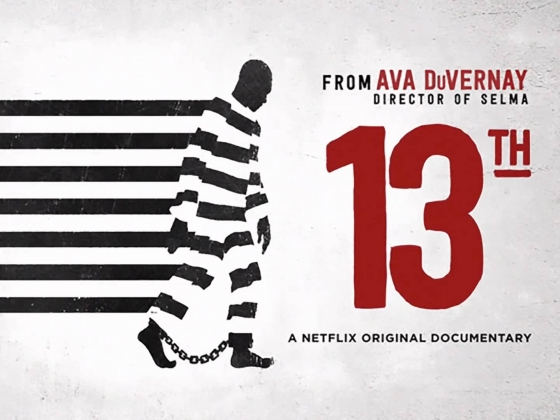
Takeaways: 13th


13th poster

This was, by far, the hardest watch yet.  I Am Not Your Negro was a fluffy hug by comparison.  While not necessarily designed to shock or appall, the information and media used in this film is both shocking and appalling, and I was HURTING by the end of it.  So, for those squeamish, fair warning. 

Like a lot of average Amerian kids, I grew up with the white-washed version of history:
Slavery happened, back in the dark ages,
segregation was terrible,
the civil rights movement fixed it,
thank god- lets move on.

I didn't experience a massive amount of white guilt in learning this Disney-version of history because that's exactly what it's designed to do: help white people forget the horrors of the ancestry of this country.  Regardless of whether or not there are slave owners on your family tree we all live here and unfortunately the sins of the fathers are passed down to ALL of us.

The ACTUAL history of slavery in America, I have now learned, is this:
Slavery happened, in an America so much more similar to the one we currently live in than anyone would like to admit,
and never... actually went away.
It changed form, and now the systems that support it are so deeply ingrained in society that the only way to actually fix it is to rebuild... pretty much everything.

WHAT!?!  Pretty fucking horrifying.  John Oliver related it to the shock many experienced when learning about the Tulsa massacre from watching Watchmen.  I've heard the expression "waking up white"- I think that's what this feeling is.

To learn that the absolute worst period of American history is not in any way, shape, or form actually history caused me actual physical pain.  I was at times nauseous, tearful, clenching, fidgeting, and ultimately drained by the end of it.  And that's an appropriate response, I think, to discovering just how truly horrific the state of this country actually is.

So, here's what I learned:  As soon as slavery 'ended', white supremacists (who did not stay in the south) extorted a loophole in the constitution- the 13th amendment (thus the title of the film) which states:
"Neither slavery nor involuntary servitude, except as a punishment for crime whereof the party shall have been duly convicted, shall exist within the United States, or any place subject to their jurisdiction." 

This enabled the re-enslavement of black humans by the thousands under the guise of protecting communities from "criminals" after blacks were arrested (often for nothing at all) and used as free labor through convict leasing. In order to prevent the majority from becoming sympathetic to the plight of these "criminals", the media created the false narrative that black men were dangerous, violent, and actively looking for ways to harm the whites they resented for their past treatment and thus the black man = criminal myth was born.

The word criminal comes up in this film so much that I actually started to get a bit sick of it.  But I recognize what they're trying to do: point out how deeply ingrained this idea is within the entirety of the American psyche.  Countless psychological studies have proven that the average white person, regardless of their actual beliefs about race, will label a black man as suspicious when shown a series of neutral photographs of different races.  And there's an automatic, unspoken assumption that is deep within the mind of everyone who lives in this country- regardless of whether or not we recognize it.

This brainwashing is so destructive not only to people like me who grew up unaware of the racism I was trained to believe, but to the black identity in and of itself.  As one of the scholars pointed out: "So you have educated a public deliberately, over years, over decades, to believe that black men in particular, and black people in general, are criminals.  I want to be clear because I'm not just saying that white people believe this, right?  Black people also believe this and are terrified of our own selves."

Fuuuuucck,  Anyway, back to history: media continued to influence the American psyche and got a particularly big boost in 1915 with the release of "The Birth of a Nation" which depicted black men as, you guessed it, criminals and rapists and white supremacists- the KKK specifically- as heroic forces preserving the value of the American way of life.  (Horrifying fact: this was the first film in history ever to be screened at the White House.)  As a result of the popularity of this movie, people flocked to join their local chapter of the KKK and lynching became a fun evening activity for a lot of people who believed they were simply helping to keep their communities safe.

When this murderous form of racism became unpalatable to the average American, segregation was created as a solution to the problem.  I think most of us got some education on the horrors of segregation and Jim Crow laws but were also taught that the civil rights movement ultimately solved all the problems of this time.  Fun fact:  it didn't.  The 1964 Civil Rights Act and 1968 Fair Housing Act were supposed to end segregation, pay inequality, and discrimination by businesses and public facilities.   Housing is still very much segregated as are schools (no longer by force but by economic inequality).  The pay gap between white and black Americans is larger now than it was in the 60s when the civil rights movement was in full swing.  And discrimination by businesses is still rampant in this country and has been emboldened by the current sitting president and other outspoken white supremacists.

The Voting Rights Act was supposed to end gerrymandering  (it didn't), voter discrimination (it didn't), and voter suppression in general ultimately failed to end any of those practices that still very much take place today.  And thanks to the fact that any individual convicted of a federal crime is ineligible to vote the whole black man = criminal myth pretty much all but guarantees that voter suppression remains intact.  Which brings us back to crime.

The film then goes on to explain how being "tough on crime" became one of the core requirements for anyone, regardless of political party, to get elected.  They site specific laws advocated for and enacted by Nixon, Reagan, George Bush Sr., and Clinton and give the statistics on the number of jailed individuals going up by 200k increments, then a 500k increment, and finally a 1 million increase each decade since 1970.   And 40% of those now more than 2.2 million prisoners are black.  (That's in 4 black people in the country.)

With so many people in prison, and so many billions of dollars going into the creation of prisons, this birthed the prison industrial complex.  To learn that this complex is not only a multi billion dollar industry but that there are several legal systems in place which support it was disturbing on a level I was previously blind to.  And the fact that 97% of prisoners were sentenced by plea bargain rather than by trial ensures that this will continue.  Not to mention the legacy of police racially profiling and outright murdering black people.  We are living in the age of mass imprisonment.  The way that things were after the civil war when people were arrested, quite literally just for being black, and then imprisoned by a system designed to keep them in jail, and used as free labor while there- well, that's exactly the way things are now.

That's the primary point of this movie- slavery never really ended in the United States.  It simply changed forms.  It was always an economic institution first, driven by racism and white supremacy, and it still is.  And given the amount of profit the current system makes, it has become that much more difficult to try to dismantle this multi systemic machine.  Which means that it will take that many more of us fighting it for things to change.

The ACLU, Vera Institute of Justice, Brennan Center for Justice, Critical Resistance, and many, many other organizations have been working hard to make changes on all levels and to empower individuals to fight the systems within their local communities as well.  I as one person may not be able to do much, but there is strength in numbers and if enough of us educate ourselves to the way things really are (and this film is a good way to start that process) and start actually doing something about it, it will have to change.  It has to.

Sunday, August 2, 2020

Takeaways: Daring Greatly by Brené Brown

This is my second book by BrenĂ© Brown. It has only strengthened my resolve to read all of her books (not to mention listen to her podcasts, watch all of her interviews, and so on, and so on). I have so much hero worship for this woman I think I’d all but explode if I ever actually got to meet her. All of which is to say that I’m a bit biased, so fair warning.

Like the last book, my life is just a bit better because I read this. The concepts she discussed here were a bit more familiar and I was just a little bit braver in trying to practice them. Just about every time I finished reading I’d go bug my boyfriend with another vulnerability practice in which I’d let him know something else about how I was feeling, what I was afraid of, how I was struggling. It’s never fun, it’s always scary, and it’s always incredibly rewarding. I feel braver, we feel closer to each other, and things are always just a tiny bit better.

This time around she goes into specifics about the scarcity culture and the myths it leads us to buy into as a way to break down the initial barriers to practicing vulnerability. Then she looks at the primary shame triggers we face and the things the "gremlins" use to get us- in less details than in "I Thought it Was Me" but with more specifics for men. Then she looks at the "armor" we use to shield ourselves from shame that has to be taken off so that we can live in vulnerability. And finally she breaks down putting vulnerability into action at work, in school, in one's community, and finally at home in parenting and cultivating a wholehearted family.

As always, there's more of my copy that is highlighted than is not so it's all but impossible for me to pick out the core passages that resonated. Everything did. Most from my own experience but anything I haven't directly encountered myself I've seen and been effected by. But if I had to pick one core take away I think it would be this: don't hide your humanity.

The lesson she illustrates over and over again is that to be alive is to make mistakes and that you cannot ever achieve anything worthwhile without doing so. So it's less about doing the right thing and more about owning up to doing the wrong thing with grace and using that to lead by example- certainly a very different message than what I grew up believing about self improvement and what it means to be a good person. She says it's not about what you know and even less about what you say but all about what you do and therefore if you want to live wholeheartedly at home, at work, in whatever leadership role you may find yourself in the challenge is not to hide your mistakes from those who follow you but rather to purposefully draw attention to them as the lessons they are.

And she gives some good, important pointers as to how to do this in a world that still uses- in larger and larger ways I would argue, shame to keep people in line and shut up those who dare to speak out against the systems that require their silence. It's an incredibly important message for this time when a lot of us are waking up to the dangers of our own inaction and trying to stand up for what we believe in. Our world is full of individuals who have been disenfranchised by shame and the only way to change that is for each and every one of us to cultivate shame resilience and start fighting back against those who would use shame to control us. It's a daily battle and it's hard. But, as she concludes: "nothing is as uncomfortable, dangerous, and hurtful as believing that I'm standing on the outside of my life looking in and wondering what it would be like if I had the courage to show up and let myself be seen."

Saturday, August 1, 2020

Takeaways: I Am Not Your Negro

Raoul Peck's documentary uses the words of James Baldwin and archival material to examine the history of race and the civil rights movement in America.

*From time to time I'll be talking about media I'm consuming in pursuit of knowledge, growth, or help understanding some of these difficult concepts.  These are not movie/tv show/podcast reviews as I'm not discussing how well made they are, rather what I learned from watching them.

I hate to admit that I'd never heard of James Baldwin before this film.  Now that I have I've got several books to add to my reading list as I've heard from multiple sources that he was an amazing writer and had a lot of incredibly powerful spiritual messages.  In my brief exposure to his words in this movie I was struck by how poetically he described heartbreak in the moments of learning of his friend's deaths.  (His friends being Medgar Evers, Lorraine Hansberry, Malcolm X, and Martin Luther King Jr.)

I don't know if I've ever heard it explained before- of what it feels like to grow up black in a white world, and how strange of a revelation it is to learn that you are black and that this world you live in is not your world.  This one quote sums it up perfectly: "It comes as a great shock around the age of five, or six, or seven, to discover that when Gary Cooper was killing off the indians, while you were rooting for Gary Cooper, that the indians were you.  It comes as a great shock to discover the country which is your birth place, and to which you owe your life and your identity, has not in its whole system of reality, evolved any place for you."

One of the things that has been recommended by activists, to help white people learn a tiny bit of what it feels like to be black, is to watch only black media and see what that feels like.  I've only dipped my toes into the pool so far with things like Dear White People and Never Have I Ever but even with that tiny amount of exposure I'm already struck by a barrier.  I can admire these characters, and love them, and even empathize with their emotions- but I can never emulate them. 

We white people grow up watching all these role models (for better or worse) and thinking that we can grow up to be them.  To grow up in a world where there are no heroes who look like you, share your history, see the world from inside the same skin- how demoralizing that must be.  And don't get me wrong- I'm not saying I had a lot of great role models.  I see more and more how much of the media I was exposed to growing up portrayed only negative female stereotypes.  But at least there were females I related to.  White females.  I could turn on the tv and see myself in the individuals whose stories I connected with.

Looking at the drive of capitalism and the worship of consumerism as the things that enable people to maintain their ignorance is also pretty profound: "For a very long time, America prospered.  This prosperity cost millions of people their lives.  Now, not even the people who are the most spectacular recipients of the benefits of this prosperity are able to endure these benefits.  They can neither understand them nor do without them.  Above all, they cannot imagine the price paid by their victims, or subjects for this way of life, and so they cannot afford to know why the victims are revolting."

How could I have known that the nice, safe suburban neighborhood I grew up in was built on the literal corpses of an entire race of people?  Especially when I was not taught (and lord knows I wasn't) that not only was this the case, but that this was the way the world worked?  I grew up believing that people survived and thrived based on their own merits (one of the core American myths still being widely perpetuated today). 

The core message that is presented here, and my primary takeaway is this: there is no such thing as a negro.  Much like the fabled black sheep, the black people of this world have inherited the sins of those who cannot and will not look at themselves.  "I have always been struck, in America, by an emotional poverty so bottomless, and a terror of human life- of human touch, so deep that virtually no American seems able to achieve any viable, organic connection between his public stance and his private life.  This failure of the private life has always had the most devastating effect on Americans' public conduct, and on black-white relations.  If Americans were not so terrified of their private selves, they would never have become so dependent on what they call "the negro problem".  This problem which they invented in order to safeguard their purity has made them criminals and monsters, and it is destroying them."

That's the first time that that concept- of black humans as black sheep- has ever been explained to me with such clarity before.  It makes so much goddamned sense.

In the end, I'm left with the final words of the film as a call to action.  Of deep, personal reflection, as to the why- the driving force behind our need to defame, dehumanize, disenfranchise, and destruct:
"It is entirely up the the American people and our representatives whether or not they are going to accept and deal with and embrace the stranger they have maligned so long.  What white people have to do is try to find out, in their own hearts, why it is necessary to have a N* {we all know what racial epithet that's short for.  I'm not writing it out.} in the first place.  Because I am not a N*.  I'm a man.  But if you think I'm a N*, it means you need him.  The question the white population of this country has got to ask itself, if I'm not the N* here, and if you invented him, then you've got to find out why."

I'm trying James Baldwin.  Thanks for pointing me in the right direction.