Pages

Showing posts with label Book Reviews. Show all posts

Saturday, September 26, 2020

So You Want to Talk About Race by Ijeoma Oluo (Takeaways)

So You Want to Talk About Race by Ijeoma Oluo

I am grateful beyond my ability to express to Ijeoma Oluo for writing this. It is truly a gift to white people who want to learn but are sometimes/often afraid to ask because, as she points out repeatedly, it is not the responsibility of the black person you are talking to to educate you. She breaks down everything from what racism is and isn't, how deeply ingrained it is within all of our psyches, and how it's intrinsic in basically every single facet of American society and culture. From checking your privilege and the importance of interesctionality to police brutality and the school-to-prison pipeline to cultural appropriation and microaggressions all the way down to why hair is such a huge and illustrative issue showing how deep the roots (no pun intended) of all this brainwashing goes.

SO MUCH came out of my reading of this. For one, I will never again say "I'm not racist" because, as she points out "if you are white in a white supremacist society, you are racist. If you are male in a patriarchy, you are sexist. If you are able-bodied, you are ableist. If you are anything above poverty in a capitalist society, you are classist. You can sometimes be all of these things at once." And recognizing, as she states several times, that none of this has anything whatsoever to do with being a good or bad person but simply everything to do with being American. That's something a person like me who is prone to violent storms of self criticism needs to hear, and I'm grateful to her for pointing it out as often as she does.

For another, the importance of distinguishing systemic racism from racism not only because of what she pointed out above, but because "We can get every person in America to feel nothing but love for people of color in their hearts, and if our systems aren't acknowledged and changed, it will bring negligible benefit to the lives of people of color."

And from that, the single most important take-away of the whole thing, that the power of being white is that we get to be, as Hamilton taught us "in the room where it happens" and subsequently we have the power to ask questions, point out mistakes, and speak up for the people who aren't in those rooms. Because "Racial oppression starts in our homes, our offices, our cities, and our states, and it can end there as well."

On the whole, I can't possibly recommend this book highly enough. It is not, by any means, an easy read for a white person. But it is written by a woman who seems to genuinely want to educate, assist, and share with people on the outside looking in. She is not harsh, she is not chastising, she is not trying to shame white people into change. She is human, often identifying her own privilege and how much that has made even her blind to, and she is funny in ways that do not soften the blows of the things that need to hit hard. Again, what a gift.

*Quick note: I've written all this from my perspective as a white person and not even mentioning how useful it would be for a black person to read because if this has taught me anything it's that I can't even begin to imagine what a black person (or any person of color) would think of it. While she does speak directly to the black reader on certain topics, mainly to legitimize and defend their experiences, I think the bulk of the book really is for white people who want to learn. And that is so desperately needed.

Wednesday, September 9, 2020

Traveling Mercies: Some Thoughts on Faith by Anne Lamott (Takeaways)

Traveling Mercies by Anne Lamott

This is one of the core literary sources for my church; it gets referenced often. Though Anne Lamott is clearly Jesus-centric in her beliefs she came about it the best way: through pain, addiction, death, failure, and the loving devotion of humans who refused to give up on her. Though I tend to be Jesus-phobic (and really scared of anything echoing classical Anglo-Saxton sensibilities) I could relate to most of everything else. It’s a great reminder that whatever you call it- spirituality, faith, religion, even Jesus- it’s all the same thing. Which is, of course, how I got to join my faith in the first place.

And, side note, but I'm not sure I've ever heard such an equally charming and accurate description of UU: "Mine was a patchwork God, sewn together from bits of rag and ribbon, Eastern and Western, pagan and Hebrew, everything but the kitchen sink and Jesus." Of course, she's not actually referring to UU there. Well, at least not consciously. But it describes my faith pretty damned well so I'm taking it.

This was my first exposure to this author and I can understand the praise I've heard for her from several different sources. Her prose is beautiful. At times poetic, other times purely perfunctory. Alternately achingly painful and hilarious. Deeply personal always, in a way that lets you sit right next to her through these encounters and stories of hope. She never sells herself as someone with answers- she confesses to being a deeply flawed, perfectly fucked up human being. And that is, of course, what makes her lovable. And what lets you feel as close to her as you end up feeling by the end.

She shares stories of everything from her bohemian childhood to her early dive deep into addiction to alcohol and substances. Her eating disorder. Her first exposures to church. Her unplanned pregnancy and the child that ultimately saved her. Her deep, deep grief over the loss of her father as well as the pain she inflicted on herself by trying to fit every man she ever loved into the hole his death left in her heart. She lays everything bare with humility and acceptance. It's inspiring to see someone own up to so much without shame. Or rather, having come through the shame with a new owned sense of identity and acceptance that only comes from looking the darkest parts of yourself straight in the eyes and saying 'thank you'.

Which isn't to say that she doesn't have a lot of deeply poignant and powerful insights about spirituality. She does. But in my experience most of the powerful insights about spirituality come from humanity- not from the heavens. And sure enough, all of hers come from her own deeply flawed and perpetually imperfect existence.

For instance, her thoughts on grief: "I'm pretty sure that it is only by experiencing that ocean of sadness in a naked and immediate way that we come to be healed- which is to say, that we come to experience life with a real sense of presence and spaciousness and peace." Or on Grace: "Grace is the light or electricity or juice or breeze that takes you from that isolated place and puts you with others who are as startled and embarrassed and eventually grateful as you are to be there." Or failure: "it breaks through all that held breath and isometric tension about needing to look good: it's the gift of feeling floppier."

While clearly contained within the timeline of her own life the bulk of these stories feel timeless. Or at least, the wisdom within them does. I can see myself going back to these pages again and again searching for that one highlighted line that perfectly and gorgeously sums up a thought or an insight or a desperately needed reminder during dark times. It's an encyclopedia of pain and wisdom I can easily reference: a gift. And I'm grateful to myself to have finally read it.

Sunday, August 2, 2020

Takeaways: Daring Greatly by Brené Brown

This is my second book by BrenĂ© Brown. It has only strengthened my resolve to read all of her books (not to mention listen to her podcasts, watch all of her interviews, and so on, and so on). I have so much hero worship for this woman I think I’d all but explode if I ever actually got to meet her. All of which is to say that I’m a bit biased, so fair warning.

Like the last book, my life is just a bit better because I read this. The concepts she discussed here were a bit more familiar and I was just a little bit braver in trying to practice them. Just about every time I finished reading I’d go bug my boyfriend with another vulnerability practice in which I’d let him know something else about how I was feeling, what I was afraid of, how I was struggling. It’s never fun, it’s always scary, and it’s always incredibly rewarding. I feel braver, we feel closer to each other, and things are always just a tiny bit better.

This time around she goes into specifics about the scarcity culture and the myths it leads us to buy into as a way to break down the initial barriers to practicing vulnerability. Then she looks at the primary shame triggers we face and the things the "gremlins" use to get us- in less details than in "I Thought it Was Me" but with more specifics for men. Then she looks at the "armor" we use to shield ourselves from shame that has to be taken off so that we can live in vulnerability. And finally she breaks down putting vulnerability into action at work, in school, in one's community, and finally at home in parenting and cultivating a wholehearted family.

As always, there's more of my copy that is highlighted than is not so it's all but impossible for me to pick out the core passages that resonated. Everything did. Most from my own experience but anything I haven't directly encountered myself I've seen and been effected by. But if I had to pick one core take away I think it would be this: don't hide your humanity.

The lesson she illustrates over and over again is that to be alive is to make mistakes and that you cannot ever achieve anything worthwhile without doing so. So it's less about doing the right thing and more about owning up to doing the wrong thing with grace and using that to lead by example- certainly a very different message than what I grew up believing about self improvement and what it means to be a good person. She says it's not about what you know and even less about what you say but all about what you do and therefore if you want to live wholeheartedly at home, at work, in whatever leadership role you may find yourself in the challenge is not to hide your mistakes from those who follow you but rather to purposefully draw attention to them as the lessons they are.

And she gives some good, important pointers as to how to do this in a world that still uses- in larger and larger ways I would argue, shame to keep people in line and shut up those who dare to speak out against the systems that require their silence. It's an incredibly important message for this time when a lot of us are waking up to the dangers of our own inaction and trying to stand up for what we believe in. Our world is full of individuals who have been disenfranchised by shame and the only way to change that is for each and every one of us to cultivate shame resilience and start fighting back against those who would use shame to control us. It's a daily battle and it's hard. But, as she concludes: "nothing is as uncomfortable, dangerous, and hurtful as believing that I'm standing on the outside of my life looking in and wondering what it would be like if I had the courage to show up and let myself be seen."

Sunday, November 15, 2015

Book Review: Water for Elephants by Sara Gruen

 *As always, WARNING: THIS REVIEW CONTAINS SPOILERS.
I'm not sure what it is about the mystique of circuses.  Maybe it's one of those things that is so deeply engraved in the landscape of our popular culture that we can't separate the stories and images from memory.  Whatever the cause, this book was familiar to me.  The setting, the characters, the scenes- all held some nostalgia even in the midst of some really horrifying events.  Too many movies set in the great depression, maybe.  Too many cultural references.

It's strange, of course, to have nostalgia for a time you've only studied in American history, for images you've only seen in movies.  But perhaps that's why I'm nostalgic- if I'd encountered any of these things in real life they probably would have been horrifying (not to mention that I'd be old enough not to remember having encountered any of it, anyway).  Rough men living day by day in harsh times, drunks slobbering and leering over scantily clad women, disabled and malformed people being stared at by frightened children, animals being beaten and tortured in horrific conditions.  None of these are happy things.  And yet there's that strange nostalgia- I have seen these things before.

The reason why is because Gruen does such a fantastic job of describing it.  The front cover includes a quote describing the book as "sensual" but that fails to cover it.  It's visceral.  The sounds, smells and physical sensations are described so exactly you feel it in your gut.  This book does a better job of that than anything I've read in a long time.

Which isn't to say that the characters aren't memorable on their own- because they certainly are.  But they're made far more real and alive because of the ways in which they react to this environment they're in.  Hell, we spend so much time inside Jacob's own body we damned near feel like we are him.  And that's a pretty impressive feat.

The plot was, in some ways, the most disappointing element of the whole story.  I'm not sure why, exactly, but boy meets girl just doesn't do it for me anymore.  Part of me wanted Marlena to end up being a bitch so Jacob could run off with Walter and the two of them could get into shenanigans of their own.  But alas, that's not what makes the big bucks and subsequently not where this book ended up.  But at least Rosie got her well deserved revenge in the end- one that I did not at all see coming from the prologue.  And in the very end, I suppose an old man running off to join the circus isn't a bad note, either.

Overall, very worth the read.  And I'm intrigued enough to see what else Sara Gruen has got up her sleeve.

Sunday, July 19, 2015

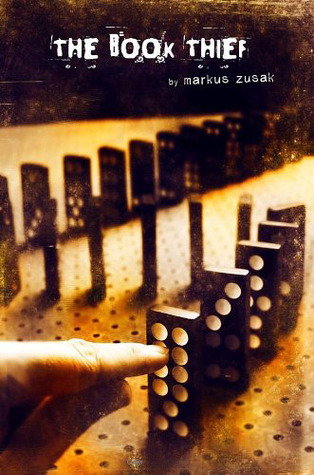
Book Review: The Book Thief by Markus Zusak

19063
So I have to come right out and say it: I LOVED this book.  I've met people who have claimed that it was their favorite book of all and knowing the tiny bit that I knew about it I didn't see how that could be.  I get it now.  So forgive me if this review is overly sentimental and sappy- I just can't help myself.

It's not just the characters that permanently lodge themselves in your heart, it's not just the moments that stick to your soul- it's the language.  The book is about the power of words and that power is demonstrated throughout every beautiful page.

In a nutshell, the story is about a young girl named Liesel Meminger growing up in Nazi Germany and it's as devastatingly sad as you might imagine it to be given that setting.  Without spoiling anything let me just assure you that this book will certainly rip your heart out.  I can't really say I had any idea of how bad it was for German civilians before reading this book.  After countless narratives and films about the holocaust I somehow imagined the entirety of Germany as a country of Nazis and neglected that conditions for civilians during that time, especially those sympathetic to Jews, was almost as bad in terms of the fear, hunger and lack of freedom.

But what really struck me about the story, and what makes it a favorite to so many, isn't the brutality or the horror of that time- it's the beauty that existed within the thick of it.  The breathtaking capacity of human compassion, the depth of love, and that indefinable human spirit that makes the narrator so attracted to these creatures he is charged with unburdening.

Death makes a fascinating narrator and as a writer reading this book I was completely and totally drawn in by the tools that Zusak uses to draft the story.  The translations: "A Translation of Rosa Hubermann's Announcement- 'What are you assholes looking at?'", the definitions: "A definition not found in the dictionary- Not leaving: an act of trust and love, often deciphered by children" and the short, stand-out moments he emphasizes: "A guided tour of suffering- To your left, perhaps your right, perhaps even straight ahead, you find a small black room.  In it sits a Jew.  He is scum.  He is starving.  He is afraid.  Please- try not to look away."  All these moments cut from the tapestry to pull you further in. 

As a narrative device it keeps you on your toes- you can't fall into any reading patterns here, the writing prevents it.  And if that's not enough there's always the occasional books within a book as with The Standover Man (with the simple drawings overlain on a white-washed page of Mein Kampf with the words bleeding through- which made me cry so freaking hard) and The Word Shaker (laid out as an ageless fable interspersed with cartoons).  At times it feels more like a collection of treasured objects than a book.

It's also interesting how the timeline is death's- not chronology's.  As he says at the beginning: "I would watch the places where we intersect, and marvel at what the girl saw and how she survived.  That is the best I can do- watch it fall into line with everything else I spectated during that time."  There are two standout moments in the beginning that don't occur until much later on in the story which serve the purpose of introducing the style more than anything else- letting you know from the beginning that this is Death's ship and you're just along for the ride.  There are glimpses of what's going on outside of Liesel's world, reminding you that this was both the holocaust and war at the same time as it was childhood for the main character. 

There were some jumps I never quite got over- letting us know that one of the greatest characters in the book was doomed to die about a hundred pages before he did, and then reminding us in fragile moments that that was coming.  That was rough, and it didn't make that death any easier to handle when it did finally come.  But for the most part it served the purpose- it drew me in, over and over again and kept me wanting to read.  The power of words: it's a theme.

In the end though, what will stick with me the most are the characters.  I collect characters like memories- they stick out in the timeline of my life and I remember them fondly as if they were witnesses to it.  And these characters are so devastatingly dear to me that I will house them in my heart forever.  Max with his hair like feathers and white-washed pages of Mein Kampf teaching our Liesel what words mean.  Rosa with her unforgettable terms of endearment and cardboard body, forever slumped over her husband's beloved accordion as she snores.  Rudy with his Jesse Owens dreams and talent for theft demonstrating what true friendship (and an endless yearning to be kissed) means.  Hans with his silver eyes, pallet of paints and priceless accordion proving that love is the strongest emotion of all.  And of course Liesel- the girl who's desire for knowledge was nursed and nurtured by this cast of characters, allowing her to blossom into an amazing story teller.  All of them- and all of those beautiful moments with them- will stay with me for as long as I have memory and I will love them.

This book was amazing.  One of my favorites.  And I can't be more grateful to have read it.

Saturday, May 16, 2015

Book Review: Rebecca by Daphne Du Maurier

I had such incredibly high hopes for this book, which I suppose was a bad idea since it set me up perfectly to be so disappointed. The first chapter is an exemplary education in the meaning of the word atmospheric and sets the stage for a story much bigger than this ended up being. But, because the writing itself is so skillfully done it's important to separate that from the plot, so let's do that.
The quality of the writing rivals some of the best authors I've ever read. Du Maurier is so adept at the nuances of stage-setting that it's possible for the reader themselves to start having dreams about Manderley. From the descriptions of the house to the servants to the ever tangible ghost of the title character it's impossible not to get chills sometimes when reading these sentences. If you wanted to learn how to build a setting using poetic prose you could do a heck of a lot worse. It almost has a "Fall of the House of Usher" feel to it in how large the house itself looms.
But perhaps that's part of the downfall of the story- the house eclipses the characters themselves. I believe, for example, that one is supposed to like or at least root for Maxim. I hated him. HATED him. I couldn't find one redeeming characteristic the whole damned book. And the narrator herself is so wimpy and wilting that's it's easy to not really care what happens to her- and you can't have genuine fear if you don't care what happens to the characters.
I tried to remind myself that it's a different time period- women didn't have a whole heck of a lot of options back then. But I often found myself thinking that she would have been much better off if she had stuck with Mrs. Van Hopper- who, coincidentally, was way more entertaining than either of the main characters.
It didn't help that once the narrator went to Manderley nothing happened for the first 200 pages that she was there. I get that thrillers are supposed to have a slow build but this is ridiculous. And when things finally do start to happen the reading goes much quicker- but it's not a rewarding end.
At the finish I find myself glad to have read this book for the writing far more than for the story. I've heard that the movie is actually superior simply the genre allows for the slow build without the drag you feel in reading and that the charters are larger due to being well-acted. I haven't seen the movie but I'm planning to, and given everything I've heard about it I wouldn't be surprised if it's one of a very small number of cases where the film outranks the book.

Sunday, September 7, 2014

Book Review: Stern Men


*Disclaimer: As always, this review contains spoilers so if you want to read this novel with bated breath don't read this review.  (Not that this is that kind-of book anyway, but just in case.)

Anyone who follows this blog knows that I am a huge fan of Elizabeth Gilbert which is why it pains me to say that I really, genuinely did not like this book.  I might go so far as to say that I hated it.

It isn't because her writing was sub-par in any way.  Gilbert shows the same astounding gift for dialogue and capturing the essence of real-life people that I first encountered in Pilgrims (her collection of short stories which I read prior to this) and I would still recommend her to anyone who was looking for a good example of writing strikingly real characters or dialogue.  She still does an amazing job of capturing the complexities of human relationships.  And she still shows the same flair for creating atmosphere with setting and she devotes more time to that in this book than pretty much anything else.  In fact, a much more accurate description of this book would be to call it a story of two islands and their people rather than a love story or even a coming-of-age story which is how most reviews describe it.

Where the book fails, however, is in the story itself.  Mainly, it's too damned short.  When I was still in the midst of reading this a friend asked me how long it was.  I told him it was a little under three hundred pages.  He commented on it being a rather short book and I realized that I hadn't really thought about it before then.  At the time, it didn't worry me.  That was until I finished a chapter ending in a huge development and then beheld the word "Epilogue" on the next page.  It hit me like a smack in the face.

And then as I read through that last chapter I was horrified to find that she had skipped over six years following the dramatic development in the previous pages and jumped straight to the (albeit heartwarming) conclusion of the story.  So far as the story arc goes she pretty much completely skipped over the climax and jumped right into the resolution.  I was shocked when I realized this.  And, to put it mildly, I was pissed.

"What the hell?  Did she not know how to write out that confrontation?  Did she write it but then scrap it for some reason?  Why the hell would she do that?"  I don't know the answers to any of these questions nor to the countless others that come up as she describes where all the characters are at six years later- because she didn't write them.

I'm not saying that you can't skip time in a story.  Heck, there's nine years between the second and third chapters and that didn't phase me at all.  What I am saying is that when the main character is revealed to have a huge life change in the works and her father has just learned this shocking revelation you don't skip over what happens next. 

What's more, the resolution, at least so far as the love story, doesn't make a whole heck of a lot of sense.  I mean, the main character meets this guy, they have a total of two relatively awkward conversations before walking off into the woods and screwing like bunnies (in one of the most graphic and out-of place sex scenes ever written, by the way).  The adults in charge are pretty pissed and one is expressly forbade to see the other so that by the time of that big revelation they haven't seen each other or spoken for about five months.  Then, in the epilogue six years later, they apparently have one of the happiest marriages on the planet even though the only thing they seem to do together is screw like bunnies.  I'm sorry, but great sex does not a miraculous relationship make.  And calling this book a love story because of that is just straight-up ridiculous.

And if you're in it for the other reasons- those complex relationships between the occupants of these two islands, their long history of distrust and warring over lobster fishing territory, their complex and somewhat fascinating way of self-governing and their chosen lifestyle which is so vastly different from the mainland- you'll still be disappointed.  Gilbert has the main character do something for the community which every single flippin' character in the book repeatedly says would never, ever happen and provides virtually no explanation as to how she does it.  Is she just magic?  What on earth did she say?  How could she possibly get them all to agree to that?  Explaining it all away by saying that because she was an accepted insider is not a satisfying end.

Like I said, I was pissed.  Still am, in fact (I'm sure you can tell).  I have absolutely no idea what purpose that giant skip forward served other than to ruin what seemed like it could have been a really good story.  And while this is no way detracts from my love of her other works it will make me wait a while before I pick up her new novel.

Thursday, July 31, 2014

Book Review: Into The Wild


I picked up this book because I had seen the movie a few years back.  It was a good movie.  But the book, in addition to being far better, is a completely different experience altogether.

This is a non-fiction account of a dangerously idealistic young man by the name of Christopher McCandless who goes out into the wild (thus the title) in order to find/redefine himself.  He has an intense love affair with nature while traveling across the country and forms the goal of proving himself by living off the land in the wilds of Alaska.  Like so many others on similar life-altering quests his ultimately proves fatal and despite getting a decent look at the person in the movie I was ultimately left feeling the same emotions most of the individuals who first read of the events felt: sadness and anger.

It was originally published in Outside magazine and the author, Jon Krakauer, received a backlash of angry letters and missives expressing outrage at the young boy's carelessness in taking on such a daunting outing without any former training or experience.  People called him stupid, naive and woefully misguided for thinking he could survive and expressed sentiments akin to "good riddance" as if he were a candidate for a Darwin Award.

While I wasn't quite as angry as the readers of the article I was ultimately dismissive at the end of the movie.  I think it was a defense mechanism protecting me from feeling too much sadness.  I had no such defenses to protect me from this book and the reason for that is because of the way Krakauer peels away the layers of the story. 

The first few chapters are rather straightforward and seem to be the primary source material for the movie.   Krakauer starts off with accounts from individuals who met the young man throughout his travels- everyone from those who picked him up while he was hitchhiking across country to those he formed rather close relationships with while working spare jobs or staying put at different locals for a while.  He included all the letters, postcards and other missives McCandless exchanged with these folks and every page of it is deeply personal, almost intrusively so.  It's one of the things that makes the book so disarming.

But more than that, it's clear that these people- each and every one of them- was captivated by this young man.  McCandless had a bigger impact on their lives during the brief time they shared than so many relationships we take for granted.  Reading the things these people had to say about him, the relationships they had with him, the deep hole which he filled and then left empty makes one like the protagonist.  Perhaps that's why the first response is anger when remembering how the story ends.

This is one of many areas in which Krakauer's writing itself shines.  Each one of these individuals has enough details to make them real.  He doesn't write paragraphs describing any of them, he gives you a snapshot of his meetings with them.  An example would explain this better than I can.  In describing his interaction with an elderly gentleman who became particularly fond of McCandless he writes:
"God, he was a smart kid," the old man rasps in a barely audible voice.  He directs his gaze at a patch of sand between his feet as he makes this declaration; then he stops talking.  Bending swiftly from the waist, he wipes some imaginary dirt from his pant leg.  His ancient joints crack loudly in the awkward silence."
Stunning, right?

Krakauer then goes on to discuss why McCandless did what he did, and it's here that the similarities between the book and the movie end.  The movie follows a linear timeline of McCandless beginning with his graduation from college and departure out west and following him to his death in the Alaskan wilderness.  His journal entries are the main anchor for the storyline and it gives the viewer a feeling like McCandless himself is narrating.  The book, on the other hand, begins with the account of a man who picked  McCandless up while hitchhiking into Alaska and then jumps back in time to discuss how he got there.  It's very clear that Krakauer is the narrator and we connect with him as a journalist of sorts who is trying to piece everything together.  And while the movie offers no explanation for McCandless' actions the book spends the bulk of the narrative doing just that.

He starts off with a sort-of sociological perspective looking at McCandless side by side with other men who seemed to share his passion and his fate.  There are two accounts of men, at various points in time, who also went out in the Alaska wilderness.  One was a mountaineer who seemed driven by a troubled relationship with his father and a need to leave a larger legacy than he'd had.  One was a man who seemed far too simpleminded to make it as long as he did in life: a simple failure to plan a pick-up led to his demise.  The final case is the most striking and it's clear that Krakauer planned it to be.  It's the story of a young man similar in age to McCandless who expressed the same ideals and beliefs about how life is to be lived and left just as gaping a hole in the lives of his family and those who knew him.  As interesting as I found all of this to be, it pales in comparison to the story of the McCandless family themselves.

The descriptions of Billie and Walt, the boys parents, and his sister, Carine, are the most heartbreaking of the book.  And nothing is sparred in the narrative.  Krakauer goes into great detail about his life growing up, the observations those who knew him made, and the family secret which ultimately drove him to sever all ties with his family.  The bravery these people display in allowing their lives to be laid bare in this book is nothing short of astounding and it goes a long way to explaining this boy's psyche and motivation for what he did.

There's another portion that I just have to share with you, it's too devastating and pure to leave out:
"As she studies the pictures, she breaks down from time to time, weeping as only a mother who has outlived a child can weep, betraying a sense of loss so huge and irreparable that the mind balks at taking its measure.  Such bereavement, witnessed at close range, makes even the most eloquent apologia for high-risk activities ring fatuous and hollow."
Like I said, Krakauer blew me away and I suspect I will be checking out some of his other works in the future.

The last section of the book is Krakauer's personal story which he uses as a parallel to explain McCandless' actions.  Like McCandless, Krakauer struggled in his relationship with his father and this turmoil led him, he reflects, to perform a number of activities as a rebellion against (but secretly desperate plea for) his father.  Like McCandless, he is enamored with nature and his particular method of experiencing it was by climbing mountains.  Like McCandless, this aspect of his personality led him to Alaska where he attempted to scale the north face of a mountain called the Devil's Thumb- an action that, like McCandless', could have easily proved fatal.

Krakauer dives into the details of his own personal experience on this mountain as an explanation for the seemingly idiotic actions that so many adolescents struggling to identify themselves as adults take.  It isn't cockiness, he explains, nor is it simple rebellion against all of the people who may say that whatever foolhardy endeavor they've set out to achieve is impossible.  Instead, he recalls from his own experience, it is a deep lack of understanding of the permanent nature of death and the limitless effects that one's actions have on the world.  I think it was this portion of the book that I resonated with most.  My teenage years, thankfully, are long behind me but I admit that I had glimpses of the overpowering emotions that I too experienced during that time in my life.  And his description of it, with his talent for wording, made me appreciate that aspect of the protagonist's psyche on a much deeper level than I had before.

Krakauer states that he himself could have easily ended up just like McCandless and in the end it was only luck that saved him.  And he argues that it was only a bad streak of the same amorphous influence that ultimately killed McCandless.

There were a lot of theories about what exactly caused McCandless to die- some of which Krakauer himself originally posited.  In the last chapter he explains each of these one by one and then knocks each one of them down with new research he uncovered after the publication of the original article.  I think it's here that Krakauer shows the depth of his respect for the subject of his writing- his refusal to accept the easy answer, his determination to look into every single aspect of his death and his portrayal of himself as someone who could have just as easily succumbed to the same fate all prove unequivocally that McCandless was far more than just a story to Krakauer and I think that's why in the end he is far more than just a story to us.

All in all I was extremely surprised by this book.  It went in a much different direction, explored unexpected avenues and ultimately affected me on a much deeper level than I was prepared for.  If you're looking for good non-fiction I can't recommend it highly enough.

Monday, December 30, 2013

Best Reads 2013


I wanted to get this up this weekend but I was a little ways away from finishing one of the books on this list and since I very much wanted to include it I decide to read through and delay my post.  I’m sorry I missed the posting this weekend but I will be making my way around to everyone on the list to share in the love of literature.

For those of you who didn’t post this weekend, let me take a minute to inform you that this bloghop is the wonderful creation of my dear friend John Wiswell over at The Bathroom Monologues.  John is one of the most well-versed people I know in terms of his extensive experience reading and loving literature and I don’t think I could identify a better person to host this run-down.  Please go visit him if you haven’t already, and read his list.

My final list consists of four books- two novels and two collections of short stories.  I’m doing it countdown-style leading up to my favorite book of the year at the bottom.  Full reviews can be found for all of these by clicking on the links provided.

I’ve been absolutely in love with Moore’s writing style ever since I picked up Bloodsucking Fiends a few years ago.  That book turned out to be the first in a trilogy that recounts, among other things, a love story between a young vampire named Jody and a young writer named Tommy.  While the primary focus they are by no means the only characters and every character, by the time this third book ended, had gotten ample screen time.  He jumps POV more frequently in this book than in any previous- multiple times in each chapter- but keeps it simple by giving you little headers for each cluster of pages so you know who’s head you’re in.  It absolutely worked and I loved that I got to see the world and the events through so many different people’s eyes.

Aside from Moore being-and I swear I’m not exaggerating here- the funniest author I’ve ever read he also brings a whole lot of heart to his characters.  They talk funny, for sure. Especially Abby Normal who mans the helm for the bulk of this book with her inimitable turn of phrase (such as “Oh my God, you’re like Obnoxious and Annoying had an ass baby!” for instance).  But they’ve all got heart and there are some surprisingly touching moments peppered throughout this tome that keep you aware that while hysterical the story is about a whole lot more than humor.  It was a beautiful end to a trilogy that I have absolutely adored over the years I’ve read it and will forever hold a special place in my heart.
Read the full review here.

I’ve been a huge fan of Gilbert ever since I finally broke down and read Eat, Pray, Love a few years back and this was my first time reading her fiction.  I was a little nervous about it- beloved memoir author does fiction?  What if she’s not good at fiction?  What if memoir is just her thing?  I was delighted to learn that those fears were unfounded and while I won’t say that her fiction is better than her memoir writing (cause I really do love her memoirs) I will say that I believe it is technically superior.

This was the most realistic dialogue I think I’ve ever read.  Her settings and physical descriptions are consistently poetic and just gorgeous.  And the complexities of the characters- their thoughts, motives and struggles are all starkly human and real.  In the end, the best part of reading this was that I got to fall in love all over again with an author who had already secured my adoration.
Read the full review here.

#2: Come to Me by Amy Bloom
This was my very first exposure to Amy Bloom’s writing and I fell over heels for her when I read it.  Much like Gilbert these stories were about humanity- the flaws, the mistakes, the ways we cope with tragedy and the unexpected results of that.  I won’t say that this was an easy read because most of these stories are downright heartbreaking- about broken families and relationships coming apart.  But they are also devastatingly beautiful. 

So many passages were works of art- just as deserving of a frame and a spot on a wall in a great museum as classic paintings and photographs.  My copy is riddled with highlighted passages that just astounded me with their complexity- rich, textured, poetic phrases that hung in my mind for days afterwards like a song.  I can’t think of anything else I’ve read that had the same impact on me.  Perhaps that’s why my Christmas wishlist was filled with more books by this author.  As since I received many of them as gifts you can bet she’ll be on my list again next year as I make my way through those.
Read the full review here.

Drum roll, please…
And my #1 read for 2013 is…

This book absolutely blew me away.  Steve Martin is a genius because he introduced me to one of my most beloved characters of all time: Daniel Pecan Cambridge.  Daniel is a quiet man.  So quiet, in fact, that few people even know of his existence.  There are a myriad of reasons for this but the number one cause is his crippling case of OCD which keeps him confined to a few block radius of his apartment.  At the beginning of the book he comes off as narcissistic- telling us of his incomprehensible intelligence and abilities.  It soon becomes clear, however, that he is telling us this in jest as he is one of the most self-deprecating people in literature.  I won’t say that he hates himself but he believes- and he uses some facts to back this up- that his lack of connection to other human beings is probably a really good thing for them.  It’s heartbreaking.

Thankfully, because at heart I’m a sucker for happy endings, things turn around for him over the course of the book.  But his emergence from the tiny corner of the world he’s painted himself into is so quiet, so small that you only know it’s happening because he tells you what the moments mean to him in hindsight.  I don’t have room here to get into the details of the truly brilliant ways in which Martin uses his words to create this new life for Daniel but suffice it to say that I was absolutely floored by them.  He is an astoundingly talented writer and I will definitely be reading more of him in the future.

But it is Daniel himself- the quiet man with a quiet heart- that makes this my number one read of the year. 
Read my full review here.

Thanks for reading my list of #bestreads2013.  Make sure you visit John's to see the full list of participants and read their lists- you might find your next great love.

Sunday, December 29, 2013

Book Review: Bite Me

This was the third and final installment of my favorite comedic trilogy about vampires.  Granted, it's the only comedic trilogy about vampires I've ever read, but still- it was pretty great.

If you haven't read the first two books- Bloodsucking Fiends and You Suck- then you're missing out.  Not because you'd be that out of your depth if you just happened to pick this up as one of our MCs fills you in the bulk of the fun from the last two books (complete with a re-cap quiz) in the first chapter.  No, you' be missing out because the first two are just as good as this one and you'd be robbing yourself if you skipped them.

I've spoken before about my deep love of Christopher Moore.  I don't know anyone funnier than him in literature. This book, and subsequently the end of this story line, has assured him permanent residence in my heart.

It isn't just the humor- though I agree with the critic who called this a laugh-a-page book.  And isn't just the vaguely Whedon-esque way that he exposes us to the new villains and developments within his world, though again, you wouldn't be wrong for making that comparison.  No, it's the heart.  Christopher Moore's characters have just as much heart as they do hilarity and you can't help but fall madly in love with them with each new utterance, actions and conflict.

He's called the last two installments of this trilogy "A Love Story" because at heart, that's what the story is about.  Our young lovers Tommy, a writer, and Jody, a newly made vampire are in love.  And as great love stories go theirs is filled with just as much conflict, depth of feeling and intimacy as one could hope for.  I won't spoil the ending for you but suffice it to say that their love story felt very real in the end, even in the face of a city over-run with vampire cats and sword-wielding samurai.  And, it ended with both of the characters being true to themselves- and how many great love stories can say that?

Though Tommy and Jody are far from the most colorful characters in the book.  Everyone of them- even the Animals who only tend to get screen time as a group- are entertaining to the last.  Abby Normal, who serves as the primary narrator for our final story, is one of the most funny I've read and her vocabulary is absolutely unforgettable.  (For example: “Oh my God, you’re like Obnoxious and Annoying had an ass baby!”)  I'll never forget her.

Technically, Moore uses enough alliteration and poetic phrases to keep me respecting him while still keeping the narrative chock-full of silliness and laughs.  This novel isn't going to be winning any literary prizes, but that doesn't mean you can't love it.  And Moore shows his deep respect for words and they way they can define a person in the overall arch of one our MCs.  "I need the words, Jody.  It's who I am."  You'll have to read the whole story to find out what that means, exactly- and I highly suggest you do.

Because in the end, this was one of my favorite story arcs.  I would highly recommend it to anyone who loves Whedon, Vampires, San Fransisco or turkey-bowling.  Or, you know, anyone who really like a funny book.

Thursday, December 12, 2013

It's Blitz Day for Carolyn and Charmaine!

It's Blitz day for Carolyn Brown, author of The Protector series and Charmaine Clancy, author of My Zombie Dog and Dognapped.  Stop by their blogs to say hi!

As part of the festivites, I'm featuring a review I wrote for Charmaine's latest: Dognapped.  Read on to hear my thoughts.

Let me come right out and say it: I loved this book. Based on the premise alone I had high expectations for the level of adorableness that would be contained within its pages and I am happy to say that it did not disappoint.

What is the premise, you ask? 12 year-old Kitty Walker is a typical girl trying to find her way in a new town. Upon first arriving, her only friend is her miniature schnauzer, Spade (and maybe her little brother Matty, when he's not too busy bugging her). At her mother's urging she decides to enter Spade in a dog show and learn how to be a junior handler. It's here that a lost dog who is terribly ill leads Kitty nose-first into the biggest mystery of her burgeoning sleuth career.

This book was filled with fun, mystery, humor, thrill and heart and kept my interest easily engaged throughout. The language is easy enough that most school-aged children will find it an easy read and yet there were a number of passages where Charmaine demonstrates her ability to turn a phrase. There's a ton of subtle nuances that flesh out the characters we see and she manages to make the settings feel just as real. I don't read a lot of children's books but I get the feeling that subtle little highlights like that aren't the norm.

The real heart of this story, of course, is Kitty. Charmaine captured her voice perfectly. I was a 12 year-old girl once upon a time and I remember what it felt like to be jealous of my mother's work which kept her away from me or of my brother who stole all the attention. I remember my dad who managed to massively embarrass me without even trying and the way that adults treated me when they thought I had no idea what I was talking about. I remember that perfect girl in school who seemed to have everything and that boy who I secretly had a crush on. And I remember loving my dog more than anything else in the world and often feeling like my furry friend was the only one who really understood me.

Every emotion, thought, observation and question is spot-on and I can imagine a whole host of young girls relating to Kitty in an intimate way. This book will be a favorite in many a young library, I have no doubt.

It's also a great starter-novel for your mystery fans. Kitty follows in the footstep of the greats with her note-taking, keen observational skills and intrinsic need to question everything. And this story has it all- theft, mistaken identity, random notes, misdirection and plots to conceal the truth and even murder. While the action is thrilling it's not scary and I think younger kids will be just as safe reading this as older tweens.

All-in-all, I'd recommend it to a large audience because everyone can easily find something to love in here.


Sunday, December 8, 2013

Book Review: Naked


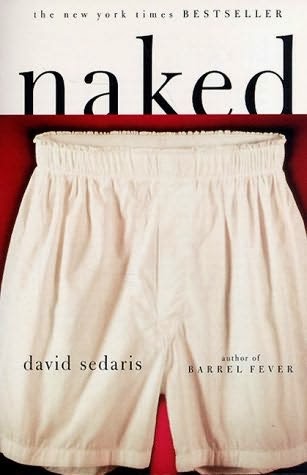
This book has been sitting on my shelf for so long that I can’t recall its origins.  I assume I picked it up in a used book store when I was killing time some Saturday afternoon.  It inevitably would have attracted me with its vaguely artistic-looking cover with plain white boxer shorts laid over a dark red background and the simple letters spelling out a word at once suggestive and mysterious: Naked.  And the ever-touted "New York Times Bestseller" stamped across the top would have helped me decide that David Sedaris (a name I’d heard of but new nothing about) was definitely the sort-of person who should be on my bookshelf.

And on my bookshelf he was- for years.  Sitting there amongst Dave Barry and Hunter S. Thompson- between comedy and surreal journalism- it did little other than make my shelf sag.  I decided it was high-time I do something to change that in September.  It is now December and the reason it took me so absurdly long to finish the damned thing is the main crux of my review: I couldn’t get into it.

Let me first acknowledge that David Sedaris is as great of a writer as you’ve heard he is.  He is a master of description and painted some of the most vibrant characters I’ve ever seen in literature.  From the way that certain people pronounce words of choice to the color and texture of their skin Sedaris paints a canvas that is both vibrant and vividly real- reminding you of people you’re sure you’ve met before and will meet in your travels throughout life.  The bulk of the highlighted passages (because I obsessively highlight the passages I really like) in my copy are physical descriptions or lines of dialogue that have the tell-tale signs of real life in every word.  And the way that people speak- for example: “She spat the word out of her mouth as if it were a worm she had discovered nesting beneath her tongue.”  Brilliant, right?

And there’s no lack of complex emotions in these characters, either.  Their prejudices, their loves, their obsessive habits and tendencies are all painfully real.  Especially the stories of Sedaris' family- the complicated politics of a family's identity have never been so clearly displayed.  I spent much of the book thinking that if someone were to ask me to describe an event in my life- even one that was hugely significant in my timeline- I couldn’t possibility do it with this much detail.   

Every now and again he comes right out with his conclusions about people and the world we live in and they can pretty profound.  The fact that "everything we buy has been poked or packaged by some unfortunate nitwit with a hairnet and a wad of cotton stuffed into his ears." or the truth that "people aren't as foolish as much as they are kind".  So yeah, Sedaris is an amazing writer.

But an amazing writer does not a fantastic book make.  And that brings me back to my first point: I could not get into this book.  Perhaps it’s because of the varied nature of the essays- they hopscotch around his life, stopping at points throughout childhood and adulthood the way a kid with ADD might tell a story.  Some are poignant and display rich emotions and character-enriching events while others are seemingly meaningless and leave you wondering exactly what the point was.  

And the way they are lined up is sometimes jarring.  An essay on the death of Sedaris’ mother- which is by far the most emotionally telling and memorable of the book- is found directly before an essay about an inconsequential visit to a nudist colony (the book’s title piece).  The one essay made me feel terribly vulnerable while the next left me wondering why I’d read it at all.  Not a fun experience for me as a reader.

Perhaps that is why I found myself finishing en essay and wanting to put the book down and move on to something that would reliably produce the desired response- like eating a sandwich so as to no longer be hungry or taking the dog for a walk so that he could relieve himself.  Productive activities that led to a small but important sense of accomplishment which this book constantly failed to deliver.  Honestly, the only thing that kept me coming back to it was my sheer stubborn desire to finish the thing and not return it to my shelf in half-read defeat.

So in the end I am left with a grudging respect for Sedaris.  This kind of irreverent humor in memoir most certainly has a place in the world and I have no doubt that Sedaris deserves all the praise he has garnered over the years.  And there are certainly people who would undoubtedly love this kind-of book.  I’m just not sure I can call myself one of them.

Wednesday, September 18, 2013

Book Review: Pilgrims

Anyone who’s followed this site for any length of time knows that I am a huge fan of Elizabeth Gilbert.  I flat-out fell in love with her when I read Eat, Pray, Love and that love was solidified when I read Committed.  (Click on the titles to read my reviews, both of which contain a great deal of me in rabid fan girl mode.)

It’s a strange experience, and one I haven’t had before: to come to know an author, love them and then learn that there’s an entirely different side to them that you never knew existed.  That’s what happened to me when I read Pilgrims, Gilbert’s collection of short stories and my first exposure to her fiction.

I know that memoir and fiction are two very different animals.  The voice that comes through in the writing should be different, because it serves different purposes.  In memoir writing, it’s deeply personal.  So all of your traits, your quirks, the things that make you you should come through in your writing.  (And Gilbert’s voice is as loud and clear as a bell.)  But fiction is different.  Your voice has to play stage crew so that your character’s voice can take center stage.  In fact, if you do your job well, your voice will be very hard to hear because your characters are so real.

Perhaps that’s why I found myself frequently forgetting that I was reading one of my favorite authors when I read this book- I hardly heard her voice at all.  There are qualities, certainly.  A certain compassion for the human condition, no matter what state it’s in.  A certain understanding of the deeply complex ways that lives intersect with each other.  A certain appreciation for the many different forms that love can take.  A lack of judgment when looking at all these things.  All of these can be found in both her memoirs and this collection.

But the voice- that feeling of having a really great conversation with an old friend in a coffee shop that made me fall head over heels for her in her memoirs- that’s not in this book.  These characters are entirely too different from Gilbert and vibrant in their own right.  They are entirely too real for you to think about the author.

Which is why I feel as though I’ve fallen in love with Gilbert anew- because this is such a distinctly different experience for me as a reader.  Few of the hallmarks that made me love her as a memoir author are there, so I got to start from scratch in falling in love with her as a fiction writer.  It seems almost odd to delineate and critique the nuances given my strong emotion towards it.  But then again, I am a writer, and this is how we learn.

Firstly, this may be the most realistic dialogue I’ve ever read in my life.  Seriously.  Not once- not one single time- while reading these stories did I feel like I was reading dialogue.  I felt like I was reading actual transposed conversations.  I have heard these voices before: the turn of phrase characteristic to a certain part of the country, the abrupt way that more aggressive types can cut you off which is jarring at first but you come to appreciate if you know them, the way that the more quiet individuals give you the bare amount of information and leave it to you to fill in the rest, the quirks of conversation that people fall into.  Every single one of these voices sounds real- like you eavesdropped on the conversation going on in the next booth at the diner or walked by an open window where people were talking loudly.  It’s staggering to realize that all these voices came from the same person and it reminds me of how very, very far I have to go in writing my own dialogue.

Secondly, the physical descriptions are striking.  I have a distinct memory of Gilbert’s description of someone’s collar and neck from Eat, Pray, Love in which she described it as a giant flower pot containing a tiny stem supporting a large, heavy flower.  Something about it stuck with me.  Well, this book is absolutely full of those distinctions.  Each image is composed of the other images that make it familiar- beards worn by prophets or the homeless, body parts that evoke the same response as baked goods in a bakery window, facial features that would appear on a sculpture before it was finished by the artist.  They’re as distinct as the voices and they encompass all the senses- sight, sound, scent, touch.  They serve as the undercoat of fur that makes the dialogue so luxurious to feel.

Thirdly, her ability to capture a distinct moment in time is truly amazing.  The large majority of these stores are moments.  A particular evening, one afternoon, a late night adventure- a pause.  They don’t recount pivotal moments and very frequently nothing all that major occurs during them.  But they give you a crystal clear view of a particular moment in the characters’ lives- their thoughts, feelings, desires, struggles, observations.   They’re distinct capsules of time with some reference to the timeline before (and sometimes after)- but they’re rarely life-changing.  It’s worth note, I think, because I don’t think I’ve read stories that display a distinct beginning, middle and end with tension and resolution so subtly.  A lot of authors hit you in the face with those elements while these stories leave you feeling… wistful.

The closest style of writing I have to compare it to is Amy Bloom.  I was often underwhelmed at the close of her stories but then found myself thinking about them in the spare moments of life, recalling the subtle details and phrases that I didn’t realize had stuck so thoroughly in my mind.  Gilbert has the same effect- you come to the close of a story feeling like there wasn’t really an end and then find yourself going over the details in your mind and tripping over subtleties you didn’t notice when you read through it.  The characters leave you ruminating, digesting for some time to come.

All-in-all, I am deeply impressed with this volume.  More so because it’s her first published book.  To come out of the gate with that much ability is hard to imagine and without falling into too much hero worship I will repeat that I have fallen in love with her all over again.

Thursday, June 13, 2013

The Blogger Book Fair is Coming Soon!


Exciting news!  I'm participating in the Blogger Book Fair by reviewing a novel for an up and coming author!  So today I'm hijacking the blog to tell you all about this awesome event and all the bloggers participating.  There's still time to sign up so check out the info below and get ready for awesome events next month! 


Check in to the Blogger Book Fair, and book your trip to far away places!

July 22-26, 2013

Authors and Book Bloggers, Sign ups for the July 2013 Blogger Book Fair will close on June 15 at midnight central time, so get your registrations in to participate!

As of 6/4/2013, we have:

Authors: 89
Books: 233
Bloggers: 14

 If you haven't yet registered, you can find all of the information on the Blogger Book Fair page.
  1. Check out the Code of Conduct
  2. Fill out either the Author Sign Up form or the Blogger Sign Up form (Deadline June 15)
  3. Kayla will match everyone with hosts and send out this information to you after sign-ups close
  4. Check out the events--all authors are eligible to participate in the events, and if you have an event you'd like to host, just fill out the simple Event Sign Up Form--all of this information can be found on the Events! page (Deadline July 8).
  5. If you're interested in hosting a giveaway to drive traffic to your site, sign up via the Giveaway Sign Up form (Deadline July 15).
  6. And if your book will be FREE or $0.99 for the duration of the Fair, you can sign up on the Free and $.99 Book Sign Up Forms (Deadline July 15).

Events:

Art Fiction Gala hosted by Lucie Smoker

Does your fiction promote the visual arts--through featuring an artist, painting, sculpture, performance art, etc? Then, consider entering Lucie's Art Fiction Gala. The Art Fiction Gala is a virtual celebration of fiction that highlights the visual arts. Dress up in your finest, pick up some friends--a bottle of wine--and sample mind-blowing fiction that crosses the line between literary and visual art. Plus a gallery of art featuring reading. More information & entry instructions

Three Wishes hosted by Kirstin Pulioff

Introduce your characters to the world. Kirstin Pulioff invites you to ask your main character, "If you found a magic genie lamp, what would be your three choices?" More information & entry instructions

Flash Fiction Challenge II hosted by Thomas Winship

Get ready to exercise your flash fiction muscles. For the Flash Fiction Challenge II, Thomas Winship will provide an opening line. From there, entrants will craft a flash fiction piece of approx 500 words. Entries will be displayed on Thomas' blog Vaempires during the BBF, spread out evenly across the five days, in order of receipt. More information & entry instructions
 
Snapshot Synopsis Contest hosted by Fel at The Peasants Revolt
Challenge: chisel your synopsis down to 50 words or less. Voting will be open throughout the fair for visitors to vote on their favorite Snapshot Synopsis. More information & entry instructions

Reader's Choice Awards hosted by Sherri at Shut Up & Read

All books registered for the Blogger Book Fair are automatically entered into the running for the Reader's Choice Awards. Voting will be open from July 22 to July 25. More information

Indie Soap Box Files hosted by Shah Wharton

Take a turn on the Soap Box. Shah invites speculative fiction writers to write a guest post about being an indie (or hybrid) writer. More information & entry instructions Restrictions: Speculative fiction writers only

Monster Menagerie hosted by Noree at Trip the Eclipse

What's your favorite monster or supernatural creature? Feature your creature in a flash fiction piece (500-800) words to be featured on Trip the Eclipse. Visitors will vote on their favorite piece. More information & entry instructions

What's Your Theme Song? Hosted by Maghon Thomas

Maghon Thomas is a fan of music, so she's turning it into a competition, hosted on her blog, Happy Tails and Tales. Tell Maghon what the theme song of your book(s) is or match a song to your favorite scene and her followers will vote on their favorites. More information & entry instructions

Office Romances: Character Job Interviews hosted by Lily Bishop

Lily Bishop at Don't Call Me Sugar, wants to know: Do the jobs that your characters have impact their relationship, or is your characters' job incidental to the story? This event is tailored for romantic fiction, but all are welcome. More information & entry instructions

Ways to Help:

Blogger Book FairDonate to the Blogger Book Fair via the BBF Donation Fund. To help get the word out about BBF, we would like to place ads on Facebook, Goodreads and other places, but to do, so we need a little help. We'd also like to have some BBF sponsored giveaways, so money donated would also go toward prizes. NO MONEY WILL BE KEPT BY ANY ORGANIZER OR PARTICIPANT.

Spread the word! Share the Fair on your social media accounts and show off the Blogger Book Fair logo in your blog's sidebar.

Join us on: