Pages

Showing posts with label Self Improvement. Show all posts

Friday, August 14, 2020

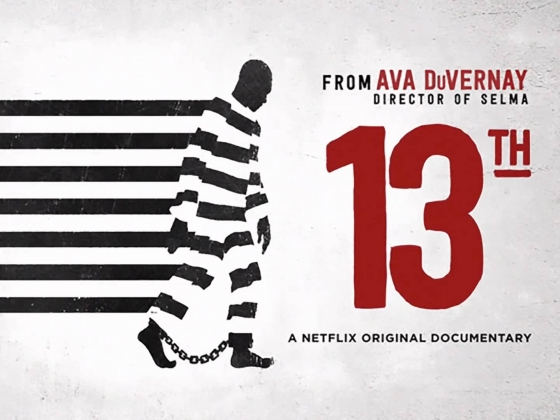
Takeaways: 13th


13th poster

This was, by far, the hardest watch yet.  I Am Not Your Negro was a fluffy hug by comparison.  While not necessarily designed to shock or appall, the information and media used in this film is both shocking and appalling, and I was HURTING by the end of it.  So, for those squeamish, fair warning. 

Like a lot of average Amerian kids, I grew up with the white-washed version of history:
Slavery happened, back in the dark ages,
segregation was terrible,
the civil rights movement fixed it,
thank god- lets move on.

I didn't experience a massive amount of white guilt in learning this Disney-version of history because that's exactly what it's designed to do: help white people forget the horrors of the ancestry of this country.  Regardless of whether or not there are slave owners on your family tree we all live here and unfortunately the sins of the fathers are passed down to ALL of us.

The ACTUAL history of slavery in America, I have now learned, is this:
Slavery happened, in an America so much more similar to the one we currently live in than anyone would like to admit,
and never... actually went away.
It changed form, and now the systems that support it are so deeply ingrained in society that the only way to actually fix it is to rebuild... pretty much everything.

WHAT!?!  Pretty fucking horrifying.  John Oliver related it to the shock many experienced when learning about the Tulsa massacre from watching Watchmen.  I've heard the expression "waking up white"- I think that's what this feeling is.

To learn that the absolute worst period of American history is not in any way, shape, or form actually history caused me actual physical pain.  I was at times nauseous, tearful, clenching, fidgeting, and ultimately drained by the end of it.  And that's an appropriate response, I think, to discovering just how truly horrific the state of this country actually is.

So, here's what I learned:  As soon as slavery 'ended', white supremacists (who did not stay in the south) extorted a loophole in the constitution- the 13th amendment (thus the title of the film) which states:
"Neither slavery nor involuntary servitude, except as a punishment for crime whereof the party shall have been duly convicted, shall exist within the United States, or any place subject to their jurisdiction." 

This enabled the re-enslavement of black humans by the thousands under the guise of protecting communities from "criminals" after blacks were arrested (often for nothing at all) and used as free labor through convict leasing. In order to prevent the majority from becoming sympathetic to the plight of these "criminals", the media created the false narrative that black men were dangerous, violent, and actively looking for ways to harm the whites they resented for their past treatment and thus the black man = criminal myth was born.

The word criminal comes up in this film so much that I actually started to get a bit sick of it.  But I recognize what they're trying to do: point out how deeply ingrained this idea is within the entirety of the American psyche.  Countless psychological studies have proven that the average white person, regardless of their actual beliefs about race, will label a black man as suspicious when shown a series of neutral photographs of different races.  And there's an automatic, unspoken assumption that is deep within the mind of everyone who lives in this country- regardless of whether or not we recognize it.

This brainwashing is so destructive not only to people like me who grew up unaware of the racism I was trained to believe, but to the black identity in and of itself.  As one of the scholars pointed out: "So you have educated a public deliberately, over years, over decades, to believe that black men in particular, and black people in general, are criminals.  I want to be clear because I'm not just saying that white people believe this, right?  Black people also believe this and are terrified of our own selves."

Fuuuuucck,  Anyway, back to history: media continued to influence the American psyche and got a particularly big boost in 1915 with the release of "The Birth of a Nation" which depicted black men as, you guessed it, criminals and rapists and white supremacists- the KKK specifically- as heroic forces preserving the value of the American way of life.  (Horrifying fact: this was the first film in history ever to be screened at the White House.)  As a result of the popularity of this movie, people flocked to join their local chapter of the KKK and lynching became a fun evening activity for a lot of people who believed they were simply helping to keep their communities safe.

When this murderous form of racism became unpalatable to the average American, segregation was created as a solution to the problem.  I think most of us got some education on the horrors of segregation and Jim Crow laws but were also taught that the civil rights movement ultimately solved all the problems of this time.  Fun fact:  it didn't.  The 1964 Civil Rights Act and 1968 Fair Housing Act were supposed to end segregation, pay inequality, and discrimination by businesses and public facilities.   Housing is still very much segregated as are schools (no longer by force but by economic inequality).  The pay gap between white and black Americans is larger now than it was in the 60s when the civil rights movement was in full swing.  And discrimination by businesses is still rampant in this country and has been emboldened by the current sitting president and other outspoken white supremacists.

The Voting Rights Act was supposed to end gerrymandering  (it didn't), voter discrimination (it didn't), and voter suppression in general ultimately failed to end any of those practices that still very much take place today.  And thanks to the fact that any individual convicted of a federal crime is ineligible to vote the whole black man = criminal myth pretty much all but guarantees that voter suppression remains intact.  Which brings us back to crime.

The film then goes on to explain how being "tough on crime" became one of the core requirements for anyone, regardless of political party, to get elected.  They site specific laws advocated for and enacted by Nixon, Reagan, George Bush Sr., and Clinton and give the statistics on the number of jailed individuals going up by 200k increments, then a 500k increment, and finally a 1 million increase each decade since 1970.   And 40% of those now more than 2.2 million prisoners are black.  (That's in 4 black people in the country.)

With so many people in prison, and so many billions of dollars going into the creation of prisons, this birthed the prison industrial complex.  To learn that this complex is not only a multi billion dollar industry but that there are several legal systems in place which support it was disturbing on a level I was previously blind to.  And the fact that 97% of prisoners were sentenced by plea bargain rather than by trial ensures that this will continue.  Not to mention the legacy of police racially profiling and outright murdering black people.  We are living in the age of mass imprisonment.  The way that things were after the civil war when people were arrested, quite literally just for being black, and then imprisoned by a system designed to keep them in jail, and used as free labor while there- well, that's exactly the way things are now.

That's the primary point of this movie- slavery never really ended in the United States.  It simply changed forms.  It was always an economic institution first, driven by racism and white supremacy, and it still is.  And given the amount of profit the current system makes, it has become that much more difficult to try to dismantle this multi systemic machine.  Which means that it will take that many more of us fighting it for things to change.

The ACLU, Vera Institute of Justice, Brennan Center for Justice, Critical Resistance, and many, many other organizations have been working hard to make changes on all levels and to empower individuals to fight the systems within their local communities as well.  I as one person may not be able to do much, but there is strength in numbers and if enough of us educate ourselves to the way things really are (and this film is a good way to start that process) and start actually doing something about it, it will have to change.  It has to.

Sunday, August 9, 2020

On Claiming My Own Voice

I am white.  Cisgendered.  Heterosexual.  Able-bodied.  Neurotypical.  White collar.  Middle class.  Suburban American.  All of which can contribute to a feeling of not being particularly special and therefore not having anything particularly special to contribute to a lot of the important conversations going on.  (Black and white thinking, I know, but true.)

I also identify as a suicide loss survivor, mental health advocate, and individual who herself struggles with mental illness.  I work very hard in my role as a therapist to normalize the difficulties my clients face and to enable them to talk about everything from serious trauma and suicidality to every other thought that can make a person feel completely alienated and alone.  And I work very hard on myself in my efforts to not only practice what I preach but also integrate greater levels of spirituality and universal compassion.  All of which leads me to feel like I have quite a lot to say on the subject of mental health and its countless intersections within all of those aforementioned important conversations.

In the end, though, the most accurate term I can use to label myself (for as useful as labels can be) is human.  I think that best captures all the similarities and differences.  Not only of myself, but of everyone.  Human describes all people on the planet regardless of what they do or don't identify as.  And therefore dehuamization in any form is what I hate the most.  And one of the most dehuamizing experiences a person can have is being denied their voice.  Especially when the person denying it is them.

So regardless of how special or completely ordinary I may be I have to speak out.  About what I know and what I don't.  I have to share information and ask questions.  I have to point out what the world looks like from within my own skin and try to get a better understanding of what it looks like from inside others'.  I have to amplify my own voice and also hand the mic over to those being silenced.

It's not about being special.  If I believe in human rights then I have to believe in my own.  Especially the right to my own voice.

Saturday, August 8, 2020

The Cycle of Grief

First, the trigger: John Oliver informing me about an entire culture being systematically eradicated in China.  Chinese Uighurs- have you heard about this?  If not click on the link below.  But be warned: it's pretty fucking brutal.

https://youtu.be/17oCQakzIl8

Here was my reaction-

Phase 1: Cynicism
Usually my first go-to.  My brain can't fathom what I'm hearing and in an initial reflexive defense move goes straight into cynicism.  These are the thoughts: Well, figures. Of course there's an entire culture that's being thrown into what are basically concentration camps.  It's certainly not the first time this has happened and it won't be the last.  Humans are such shit.

Phase 2: Anger
As Brené Brown points out, anger can be way more comfortable for a lot of us because it feels empowering.  Self-righteous rage feels a shit ton better than what comes next.  It sounds like this: Why isn't anyone doing anything about this?  How the fuck is this happening now?  We have to shut down Nike and all the other companies that are capitalizing on this bullshit NOW!

Phase 3: Despair
The most painful phase and one that can trigger a full-on "life is pointless" thought spiral if my brain gets away from me.  It goes like this:  What the fuck can I do?  Is this just going to keep happening because no one gives a shit?  How can I possibly help?  I'm so fucking useless.  If I were more active I'd find a way to do something but I'm such a lazy piece of shit I guess I'll sit here being appalled.

Phase 4: Blame/Shame
Even with all the work I do on self compassion it's still a trap I fall into.  It feels like this: Nice work, Bev.  Like life isn't hard enough right now without you putting yourself through this?  Do you fucking enjoy feeling this way?  Like it's going to help, really?  You're so fucking stupid.

Phase 5: Self- Compassion
I'm incredibly grateful that this has become as automatic for me as it now is.  It'd be nice if it came along faster in the process but I'm trying to appreciate that the pain I go through en route serves a purpose.  The self talk goes: That was really hard to hear.  Of course I feel powerless, anyone would.  I'm not a bad person because I don't know what to do.  I bet I'm not the only person who feels this way.

Phase 6: Action
Sometimes I think the internet is a horrifying cesspool of the absolute worst impulses of humanity.  Other times I thank fucking god that I have the true magic of being able to literally google the phrase "How can I help the Uighurs?" and instantaneously gain access to people who have already done the leg work for me, like this Muslim woman who provides a whole list of links to petitions I can sign, organizations I can donate to, and other resources I use to do something:
https://www.amaliah.com/post/57754/six-ways-can-help-uyghurs-muslims-china-right-now

I sign a couple of petitions, make a donation, feel a little bit better.  My initial cynicism pops back up for a second and I think "Like that'll do anything" before my self-compassion rationalizes "something isn't nothing."

Sunday, August 2, 2020

Takeaways: Daring Greatly by Brené Brown

This is my second book by Brené Brown. It has only strengthened my resolve to read all of her books (not to mention listen to her podcasts, watch all of her interviews, and so on, and so on). I have so much hero worship for this woman I think I’d all but explode if I ever actually got to meet her. All of which is to say that I’m a bit biased, so fair warning.

Like the last book, my life is just a bit better because I read this. The concepts she discussed here were a bit more familiar and I was just a little bit braver in trying to practice them. Just about every time I finished reading I’d go bug my boyfriend with another vulnerability practice in which I’d let him know something else about how I was feeling, what I was afraid of, how I was struggling. It’s never fun, it’s always scary, and it’s always incredibly rewarding. I feel braver, we feel closer to each other, and things are always just a tiny bit better.

This time around she goes into specifics about the scarcity culture and the myths it leads us to buy into as a way to break down the initial barriers to practicing vulnerability. Then she looks at the primary shame triggers we face and the things the "gremlins" use to get us- in less details than in "I Thought it Was Me" but with more specifics for men. Then she looks at the "armor" we use to shield ourselves from shame that has to be taken off so that we can live in vulnerability. And finally she breaks down putting vulnerability into action at work, in school, in one's community, and finally at home in parenting and cultivating a wholehearted family.

As always, there's more of my copy that is highlighted than is not so it's all but impossible for me to pick out the core passages that resonated. Everything did. Most from my own experience but anything I haven't directly encountered myself I've seen and been effected by. But if I had to pick one core take away I think it would be this: don't hide your humanity.

The lesson she illustrates over and over again is that to be alive is to make mistakes and that you cannot ever achieve anything worthwhile without doing so. So it's less about doing the right thing and more about owning up to doing the wrong thing with grace and using that to lead by example- certainly a very different message than what I grew up believing about self improvement and what it means to be a good person. She says it's not about what you know and even less about what you say but all about what you do and therefore if you want to live wholeheartedly at home, at work, in whatever leadership role you may find yourself in the challenge is not to hide your mistakes from those who follow you but rather to purposefully draw attention to them as the lessons they are.

And she gives some good, important pointers as to how to do this in a world that still uses- in larger and larger ways I would argue, shame to keep people in line and shut up those who dare to speak out against the systems that require their silence. It's an incredibly important message for this time when a lot of us are waking up to the dangers of our own inaction and trying to stand up for what we believe in. Our world is full of individuals who have been disenfranchised by shame and the only way to change that is for each and every one of us to cultivate shame resilience and start fighting back against those who would use shame to control us. It's a daily battle and it's hard. But, as she concludes: "nothing is as uncomfortable, dangerous, and hurtful as believing that I'm standing on the outside of my life looking in and wondering what it would be like if I had the courage to show up and let myself be seen."